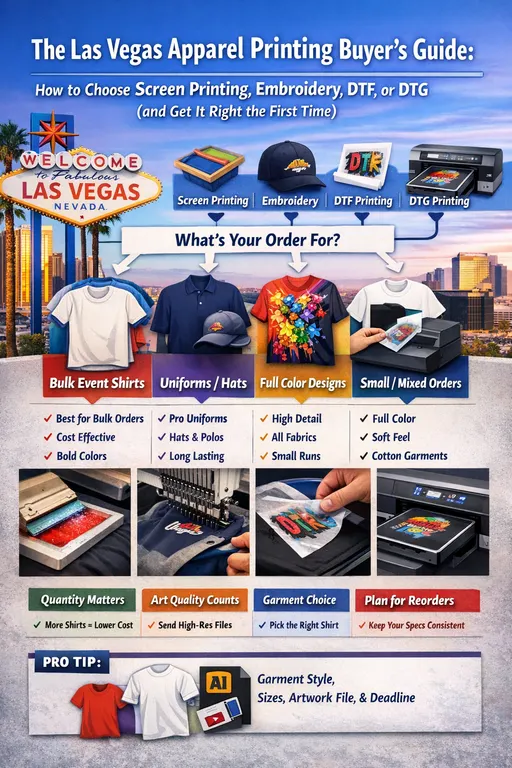
When it comes to customizing apparel, choosing the right printing method is critical to achieving the desired look, feel, and durability of your designs. Screen printing, direct-to-garment (DTG) printing, and embroidery are three popular methods that cater to a variety of needs. This guide delves into each technique, offering insights into their advantages, limitations, and the best use cases. By the end, you'll have the knowledge needed to make an informed decision, backed by real-world case studies and expert research.
Chapter 1: Understanding Screen Printing
What is Screen Printing?
Screen printing is a traditional technique that uses stencils (or “screens”) to apply layers of ink onto a surface, creating vibrant and durable designs. This method has been a staple in the apparel industry for decades due to its efficiency in mass production and consistent results.
How It Works
Preparation: Create a stencil for each color in the design.
Application: Push ink through the stencil onto the fabric using a squeegee.
Curing: Heat-set the ink to ensure durability and wash resistance.
Pros of Screen Printing
Vibrant Colors: Ideal for bold, eye-catching designs.
Durability: Ink penetrates the fabric, making designs long-lasting.
Cost-Efficiency: Economical for bulk orders.
Cons of Screen Printing
Setup Costs: High upfront costs due to stencil creation.
Limited Detail: Struggles with intricate designs and gradients.
Environmental Impact: Uses more water and chemicals compared to DTG.
Case Study: Bulk T-Shirts for a Music Festival
A major music festival needed 10,000 custom t-shirts with vibrant logos. Screen printing was the chosen method due to its ability to maintain color consistency and affordability at scale. Despite the initial setup costs, the per-unit cost was significantly lower than other methods.
Chapter 2: Exploring Direct-to-Garment (DTG) Printing
What is DTG Printing?
Direct-to-garment (DTG) printing is a modern, digital method that prints designs directly onto fabric using specialized inkjet technology. This technique excels in producing highly detailed, multicolored designs.
How It Works
Preparation: Create a digital design file.
Printing: Use a DTG printer to apply water-based inks directly to the fabric.
Curing: Heat-set the ink for washability and longevity.
Pros of DTG Printing
Detail and Versatility: Handles intricate designs and photographic prints.
No Minimum Orders: Perfect for small runs and one-offs.
Eco-Friendly: Uses water-based inks and minimal resources.
Cons of DTG Printing
Cost: More expensive per unit for bulk orders.
Fabric Limitations: Works best on 100% cotton and light-colored fabrics.
Speed: Slower production times compared to screen printing.
Case Study: Custom Apparel for a Startup
A tech startup needed a small batch of t-shirts with intricate, multicolored designs for a product launch. DTG printing was the optimal choice, allowing for detailed graphics without the high setup costs associated with screen printing. The startup achieved a professional look, despite the higher per-unit cost.
Chapter 3: The Art of Embroidery
What is Embroidery?
Embroidery is a method of stitching designs onto fabric using threads. Known for its premium appearance, embroidery is commonly used for logos and professional uniforms.
How It Works
Digitizing: Convert the design into a stitch file.
Stitching: Use an embroidery machine to sew the design onto the fabric.
Finishing: Trim threads and inspect the final product.
Pros of Embroidery
Professional Look: Adds texture and a high-end feel.
Durability: Resistant to fading and wear.
Versatility: Works on thick fabrics like jackets and caps.
Cons of Embroidery
Cost: Higher costs for complex designs and large areas.
Design Limitations: Not suitable for highly detailed or small text.
Time-Consuming: Slower production compared to printing methods.
Case Study: Uniforms for a Corporate Event
A financial firm required embroidered polo shirts for a corporate retreat. Embroidery was chosen for its professional appearance and durability. While more expensive than printing, the firm valued the premium aesthetic that aligned with their brand image.
Chapter 4: Key Factors to Consider
1. Order Size
Screen Printing: Best for large quantities.
DTG Printing: Ideal for small runs and one-offs.
Embroidery: Suitable for moderate quantities of high-value items.
2. Design Complexity
Screen Printing: Great for bold, simple designs.
DTG Printing: Excels in intricate, multicolored designs.
Embroidery: Best for logos and simple text.
3. Fabric Type
Screen Printing: Versatile across various fabrics.
DTG Printing: Works best on cotton.
Embroidery: Suitable for thick and textured fabrics.
4. Budget
Screen Printing: Cost-effective for large orders.
DTG Printing: Higher cost per unit but no setup fees.
Embroidery: Premium pricing for premium results.
5. Longevity and Use
Screen Printing: Durable for everyday wear.
DTG Printing: Excellent for occasional use.
Embroidery: Long-lasting for uniforms and outerwear.
Chapter 5: Real-World Comparisons
Comparison Table
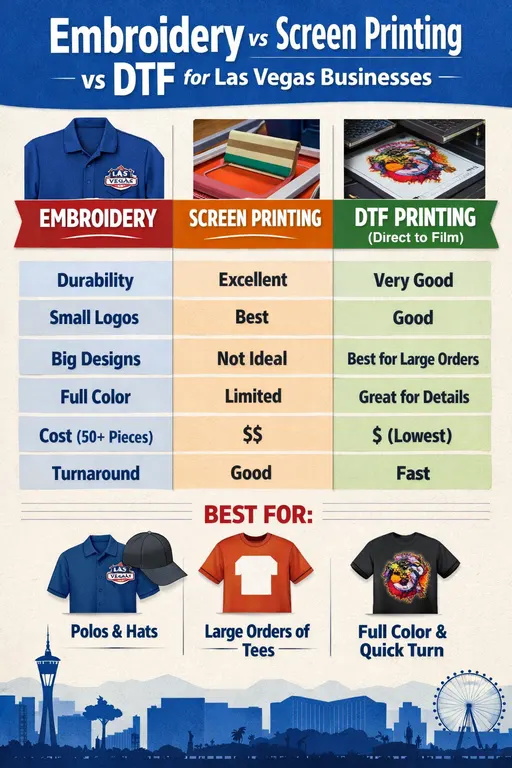
| Factor | Screen Printing | DTG Printing | Embroidery |
|---|---|---|---|
| Cost | Low for bulk | High for small orders | High for complexity |
| Detail | Moderate | High | Low to Moderate |
| Durability | High | Moderate | Very High |
| Fabric Suitability | Most fabrics | Cotton preferred | Thick fabrics |
| Speed | Fast for large runs | Slow | Moderate |
Case Study Compilation
Screen Printing: A university’s bulk order of 5,000 t-shirts for orientation week.
DTG Printing: An artist’s custom designs for an online store.
Embroidery: A sports team’s durable and professional uniforms.
Chapter 6: Expert Tips for Decision-Making
Start with Your Goals: Define the purpose of your apparel—branding, retail, or personal use.
Understand Your Audience: Consider the preferences and expectations of the end-users.
Test Samples: Request samples to evaluate the quality and suitability of each method.
Work with Professionals: Partner with experienced providers to ensure the best results.
Chapter 7: Conclusion
Choosing between screen printing, DTG, and embroidery depends on your specific needs, budget, and the intended use of your custom apparel. By understanding the strengths and limitations of each method, you can ensure your designs make the desired impact. Whether you’re ordering t-shirts for a large event, creating detailed artwork for retail, or investing in professional uniforms, there’s a printing method that’s perfect for your project.
Written by Lindy Williams