
Blog
The Art of Screen Printing: How Custom Graphic T-Shirts Are Made | Accent T-Shirts
11/27/2026
# The Art of Screen Printing: How Custom Graphic T-Shirts Are Made
Accent T-Shirts | November 27, 2026
> Discover the screen printing process, its creative history, and how ink, color, design, and fabric come together to create custom graphic t-shirts.
---
More Than Ink on Fabric: The Creative Process Behind Screen-Printed T-Shirts
A graphic t-shirt might look simple at first glance, but behind every finished design is a combination of artistic decisions, technical preparation, and production craftsmanship.
Screen printing has been one of the most influential techniques in apparel decoration for decades. From independent clothing labels and concert merchandise to business uniforms and promotional apparel, the process has helped transform ordinary cotton garments into wearable artwork.
Its appeal comes from its versatility. Almost any visual concept can inspire a screen-printed design, provided the artwork is properly prepared for production.
At Accent T-Shirts, we recognize screen printing as more than a manufacturing technique. It is a creative process that connects visual design with everyday clothing.
---
1. From Traditional Printing to Modern Graphic Culture
Screen printing has a long history that predates the modern graphic t-shirt. Early stencil-based printing techniques developed across different parts of the world, eventually influencing the methods used in contemporary screen printing.
During the twentieth century, screen printing became increasingly important in commercial graphics, advertising, posters, and fashion. As t-shirts became everyday wardrobe staples, the technique provided a practical way to transfer artwork onto fabric.
Music, sports, streetwear, and pop culture helped accelerate its popularity. Band merchandise, promotional shirts, and graphic fashion all contributed to making screen-printed apparel a recognizable part of modern culture.
---
2. How the Screen Printing Process Works
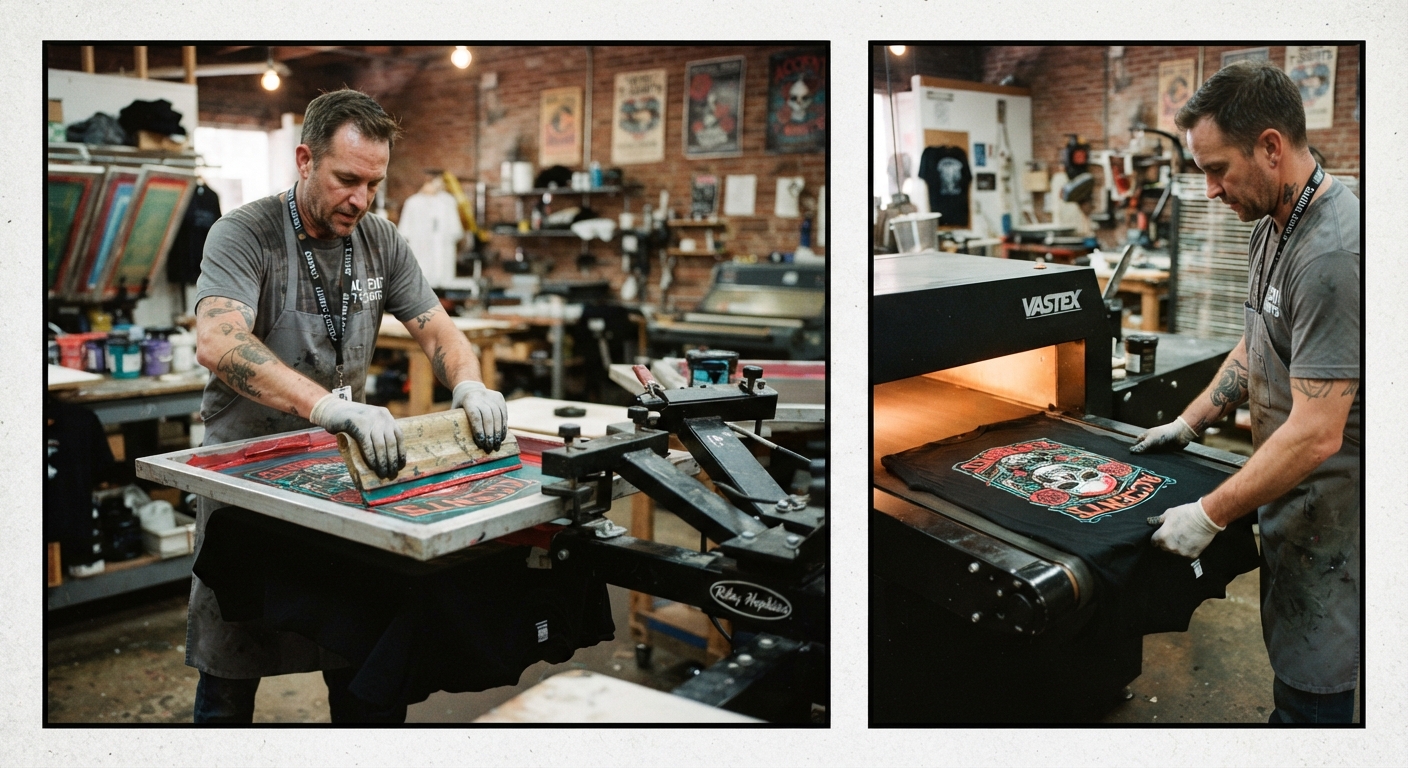
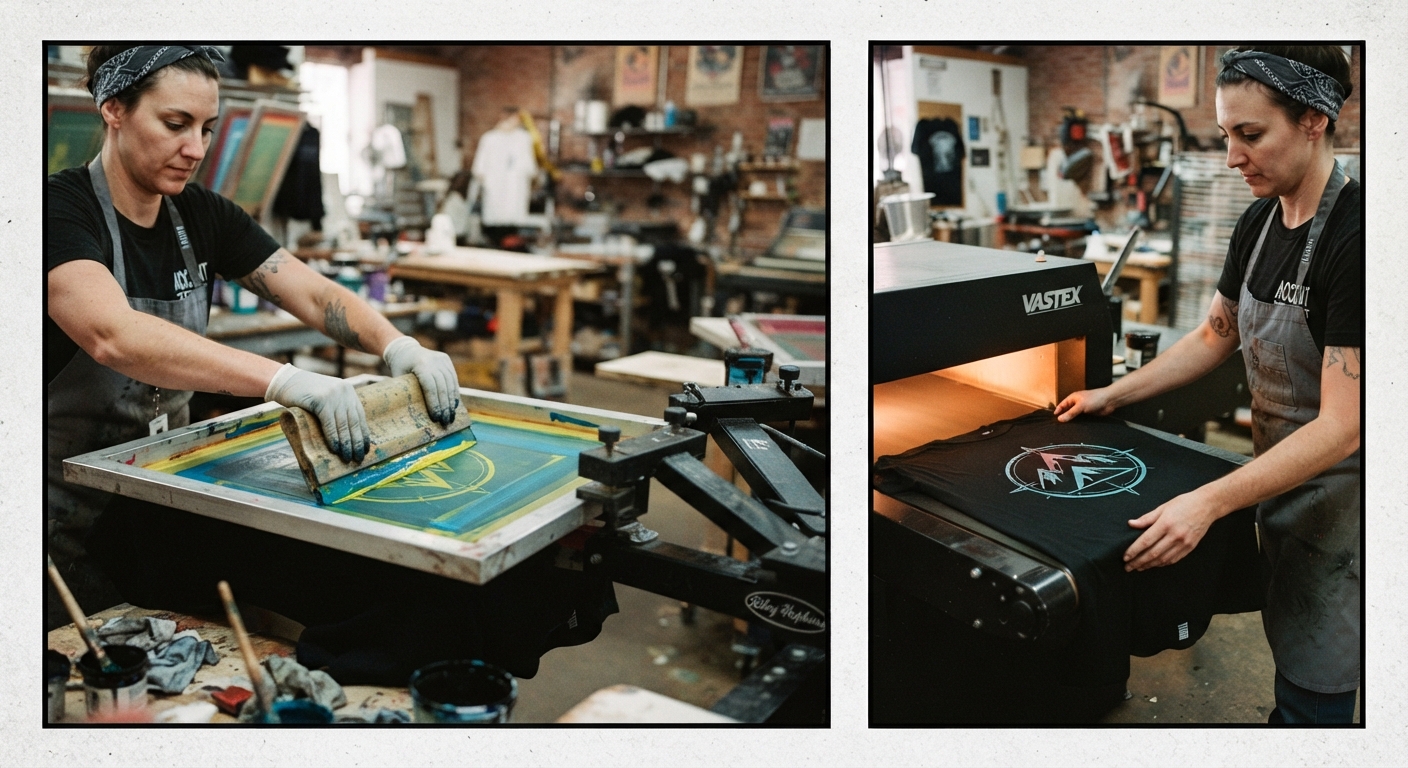
Screen printing involves transferring ink through a specially prepared mesh screen onto a garment. Each color in a design generally requires its own screen, allowing multiple layers of ink to create a complete graphic.
Key Production Stages
- Artwork Preparation: The original design is prepared and separated into the appropriate color layers.
- Screen Preparation: A mesh screen is coated with a light-sensitive emulsion and prepared for the artwork.
- Image Exposure: The design is transferred onto the screen through an exposure process, creating open areas where ink can pass through.
- Ink Application: Ink is placed onto the screen and pushed through the open mesh using a squeegee.
- Curing: The printed garment is heated appropriately to help the ink set and create a durable finished print.
Every stage contributes to the quality of the final product. Proper preparation, registration, ink selection, and curing are essential to achieving consistent results.
---
3. Why Screen Printing Works So Well for Graphic Designs
One reason screen printing remains so popular is its ability to produce bold, recognizable graphics. The technique works particularly well for designs that use strong shapes, typography, illustrations, and defined color areas.
Common Uses for Screen-Printed Apparel
- Band and concert merchandise
- Sports-inspired graphic t-shirts
- Company logos and branded apparel
- School and organization shirts
- Event merchandise
- Independent clothing brands
Screen printing also allows designers to experiment with different ink effects, including specialty finishes and textured applications. Depending on the ink and production method, a design can appear vibrant, understated, vintage-inspired, or highly contemporary.
---
4. The Importance of Color and Typography
A successful graphic t-shirt begins long before the printing process. Color selection, typography, spacing, and composition all influence how a design looks once transferred onto fabric.
- Vintage Styles: Often rely on muted colors, distressed lettering, and slightly weathered graphics for a nostalgic appearance.
- Contemporary Styles: Often lean on bold typography, clean geometric shapes, and high-contrast colors.
- Garment Interaction: The shirt itself also matters. A design that looks excellent on a white shirt may require adjustments when printed on black, gray, or colored fabric.
Understanding how artwork interacts with the garment is an important part of preparing a successful screen-printed product.
---
5. Screen Printing Versus Embroidery
Although both techniques are widely used in custom apparel, screen printing and embroidery serve different creative purposes.
| Feature | Screen Printing | Embroidery |
| --- | --- | --- |
| Best For | Larger artwork, colorful illustrations, detailed graphics | Logos, lettering, smaller decorative elements |
| Texture & Finish | Smooth or specialty ink finishes on the fabric | Raised physical texture created with thread |
| Common Pairing | Often used on the back or main front graphic | Often paired on the left chest or sleeve |
The two techniques can also complement one another. A garment might feature a screen-printed illustration on the back with a small embroidered logo on the front. Choosing between them depends on the desired appearance, garment type, artwork, and intended purpose.
---
Turning Creative Ideas Into Wearable Art at Accent T-Shirts
Screen printing has helped make the graphic t-shirt one of the most recognizable forms of everyday self-expression. A shirt can represent a favorite band, a sports team, a business, an event, or an entirely original artistic concept. The printing process provides the foundation for bringing those ideas from a digital design into the physical world.
At Accent T-Shirts, we appreciate the creativity and craftsmanship behind custom apparel. From bold graphics to simple branded designs, screen printing continues to demonstrate how a little ink and a great idea can create something worth wearing.
![The Art of Screen Printing: How Custom Graphic T-Shirts Are Made | Accent T-Shirts]