T-Shirt Printing Resource: Matching Fabrics & Inks | Accent T-Shirts
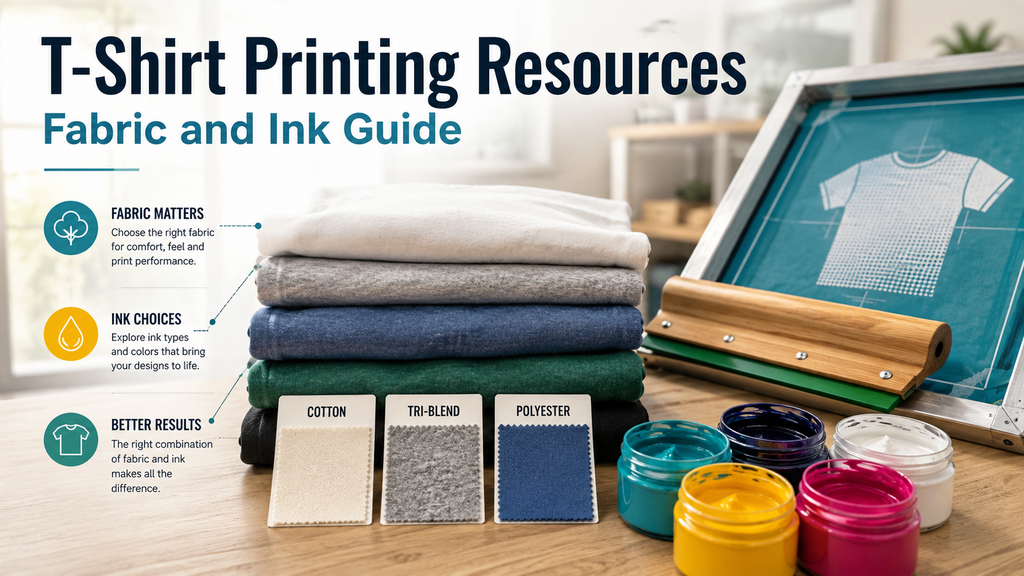
The Ultimate T-Shirt Printing Resource: The Science of Fabrics & Inks
When planning a custom apparel project, it’s easy to focus solely on the artwork. However, the secret to a high-end custom shirt isn't just the logo—it’s the chemistry between the fabric and the ink.
Not all t-shirts absorb ink the same way, and using the wrong ink on the wrong fabric can lead to cracking, dye migration, or a print that feels like a stiff piece of plastic.
Whether you’re ordering convention merch, company uniforms, or a retail brand line, this resource guide breaks down how fabrics and inks work together to produce crisp, long-lasting prints.
Part 1: The Chemistry of Inks
Different printing techniques utilize distinct ink formulations. Here are the primary inks used in modern custom apparel printing:
1. Plastisol Ink (The Industry Standard)
Plastisol is a PVC-based ink that sits on top of fabric fibers rather than soaking in. It requires high heat (~320°F) to cure and fuse.
- Look & Feel: Vibrant, thick, opaque colors with a slight texture.
- Best Uses: High-volume screen printing, dark-colored garments, and bold athletic logos.
- Longevity: Extremely durable; holds up through hundreds of wash cycles without fading.
2. Water-Based Ink (The Soft-Hand Choice)
Water-based inks use water as the primary solvent to carry pigments. Instead of sitting on top of the fabric, the ink sinks into the garment fibers.
- Look & Feel: "Ultra-soft-hand" feel where you can barely feel the print on the shirt. Gives a breathable, vintage finish.
- Best Uses: Fashion-forward retail apparel, lightweight summer tees, and detailed graphic prints.
3. Discharge Ink (Magic for Dark Cotton)
Discharge ink is a specialized water-based formula mixed with a bleaching agent. During curing, it lifts the original fabric dye out of dark cotton and replaces it with the print pigment.
- Look & Feel: Completely weightless, zero-feel print on dark garments.
- Best Uses: Printing bright colors on dark 100% cotton shirts while maintaining a feather-light feel.
4. DTF (Direct-to-Film) & DTG (Direct-to-Garment) Inks
Digital inks allow for photographic detail without expensive screen setups. DTG injects water-based pigment inks directly into cotton, while DTF prints onto a transfer film backed with an adhesive powder that bonds to almost any fabric under heat.
- Look & Feel: Smooth finish capable of full-color gradients and photo-realistic detail.
- Best Uses: Low-quantity runs, highly detailed artwork, and complex multi-color designs.
Part 2: Understanding Your Fabric Options
The weave and material composition of your apparel dictate how the ink will cure and wear over time.
┌─────────────────────────────────────────────────────────────┐
│                   FABRIC & INK MATCHING                     │
├───────────────────┬─────────────────────────────────────────┤
│ Fabric Type       │ Best Ink / Print Match                  │
├───────────────────┼─────────────────────────────────────────┤
│ 100% Cotton       │ Plastisol, Water-Based, Discharge, DTG  │
│ 50/50 Cotton-Poly │ Plastisol, DTF                          │
│ Tri-Blends        │ Soft-Hand Plastisol, Water-Based, DTF   │
│ 100% Polyester    │ Low-Bleed Plastisol, DTF                │
└───────────────────┴─────────────────────────────────────────┘
1. 100% Ringspun Cotton
- Characteristics: Soft, tight weave, smooth surface.
- Print Performance: The gold standard for custom printing. It absorbs water-based and DTG inks beautifully and holds plastisol securely.
2. 50/50 Cotton/Polyester Blends
- Characteristics: Durable, wrinkle-resistant, less shrinkage than pure cotton.
- Print Performance: Great for standard screen printing with plastisol ink or DTF transfers.
3. Tri-Blends (50% Poly / 25% Cotton / 25% Rayon)
- Characteristics: Ultra-soft, lightweight, drape-fitting, premium feel.
- Print Performance: Best paired with soft-hand plastisol, DTF, or water-based inks. Because tri-blends have a textured surface, prints naturally take on a desirable vintage, heathered look.
4. 100% Polyester & Athletic Performance Mesh
- Characteristics: Moisture-wicking, stretchable, temperature-regulating.
- Print Performance: Polyester is heat-sensitive and prone to dye migration (where the fabric dye bleeds into hot ink). To print on 100% poly, decorators use specialized low-bleed plastisol inks with anti-migration bases or DTF transfers.
Summary: How to Choose for Your Next Order
- For High-Volume Event & Trade Show Tees: Go with 100% cotton or 50/50 blends paired with Plastisol Screen Printing for maximum vibrancy and cost efficiency.
- For Fashion Retail & Merch Lines: Opt for 100% combed ringspun cotton paired with Water-Based or Discharge Inks for a soft, retail-grade feel.
- For Full-Color Detailed Artwork in Small Runs: Choose DTG (on cotton) or DTF (on blends) to capture every gradient and color transition crisply.
Need Expert Guidance for Your Custom Order?
At Accent T-Shirts, we've spent over 27 years helping Las Vegas businesses, event planners, and local brands pair the right fabrics with the right decoration techniques.
📍 Visit Us: 2545 E. Chandler Ave. Ste. 11, Las Vegas, NV 89120
📞 Call Our Team: (702) 866-8888
✉️ Get a Fast Quote Online: AccentTShirts.com