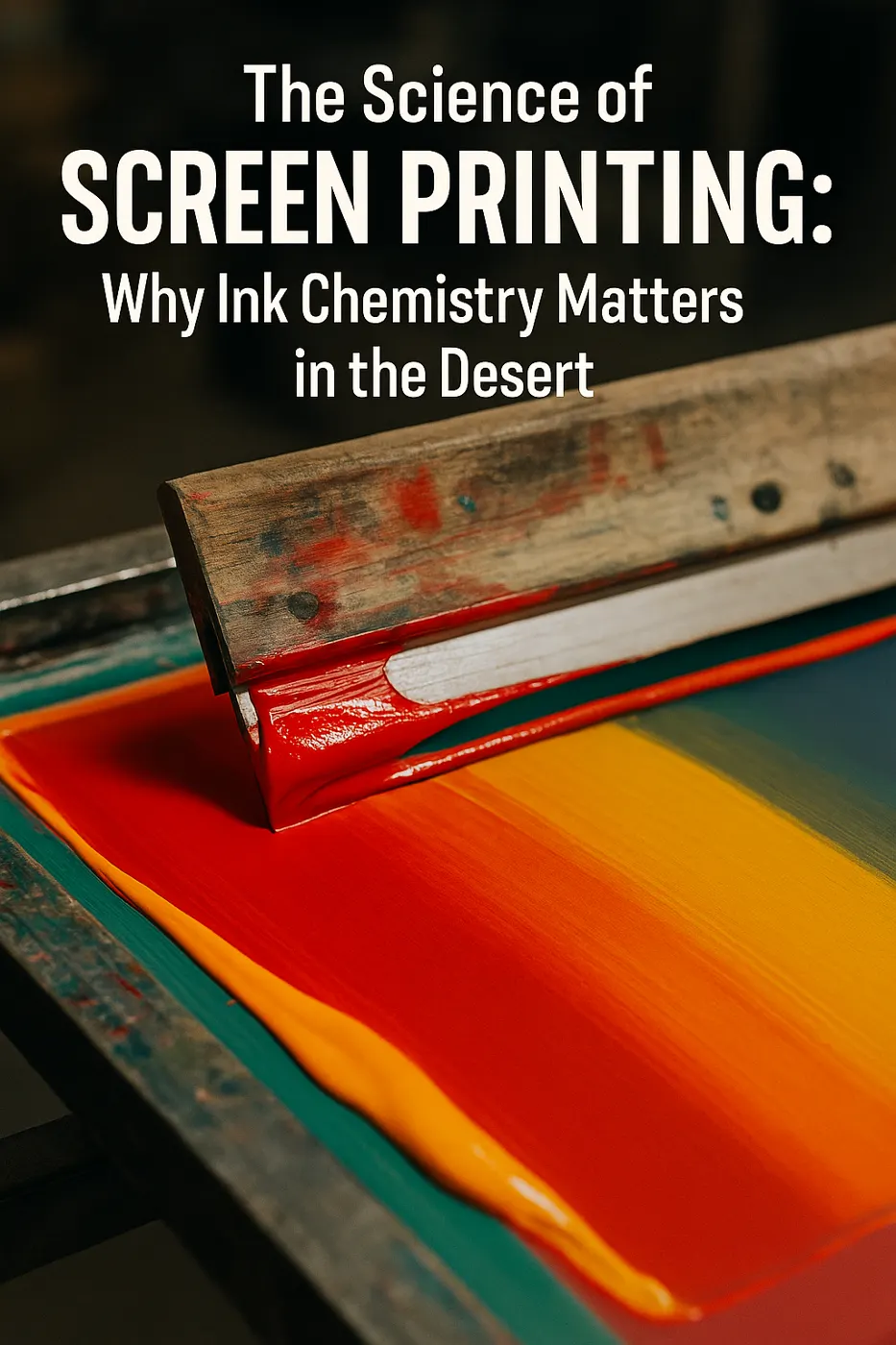
Learn why ink chemistry is critical for screen printing in Las Vegas’ desert climate. Bold colors, durable prints, better results.
Introduction: More Than Just Ink on Cotton
Most people think of screen printing as simple: push ink through a mesh screen, cure it under heat, and you’ve got a shirt. But step into a Las Vegas t-shirt shop, and you quickly realize screen printing in the desert is a science. The combination of ink chemistry, curing temperatures, and Nevada’s extreme climate creates challenges and opportunities you won’t find elsewhere.
From plastisol vs. water-based inks to how dry air impacts curing, every choice matters. In this blog, we’ll take you behind the press and into the chemistry lab—breaking down why ink selection and curing are so critical in Las Vegas, and how Accent T-Shirts fine-tunes the process for bold, durable results.
1. The Unique Climate of Las Vegas and Its Printing Challenges
A Desert Unlike Any Other
Las Vegas is defined by extremes. In summer, temperatures can soar above 110°F with humidity dipping below 10%. Winters are mild, but the air is consistently dry. For screen printers, that environment affects everything:
- Ink behavior on the screen
- Curing times in dryers
- Moisture content in fabrics
- Durability of prints under desert sun exposure
Why Climate Affects Printing
Ink chemistry is sensitive to moisture, temperature, and airflow. In humid climates, water-based inks stay wet longer. In Vegas, they dry mid-screen if you’re not careful. Plastisol inks handle the heat differently—they need controlled curing so they don’t “flash” cure too quickly.
This constant balancing act is why screen printing Las Vegas isn’t just about knowing how to pull a squeegee—it’s about mastering local conditions.
2. Plastisol vs. Water-Based Inks: The Chemistry Showdown
Plastisol Ink Basics
Plastisol is a PVC-based ink that doesn’t air dry. It must be cured with heat, typically at 320°F, to bond into fibers.
Pros:
- Vibrant, opaque colors
- Great for dark fabrics
- Doesn’t dry in the screen
- Long shelf life
Cons:
- Can feel heavier (“plastic-y”) on shirts
- Requires precise curing temps
- Less breathable than water-based
Water-Based Ink Basics
Water-based inks soak into fibers rather than sitting on top. They’re softer to the touch, eco-friendlier, and allow vintage-style prints.
Pros:
- Soft, breathable feel
- Great for fashion and retail prints
- Eco-conscious
- Beautiful detail capability
Cons:
- Fast drying in desert air = clogging screens
- Requires humidified environments
- Colors less vibrant on dark fabrics without special bases
Ink Choice in Las Vegas
In Vegas, plastisol dominates because it’s more forgiving in the desert. Water-based is possible, but requires extra steps—humidifiers, additives, and faster production. At Accent T-Shirts, we use water-based for certain retail-style jobs, but plastisol is the workhorse for conventions, uniforms, and event gear.
3. The Science of Ink Curing in the Desert
What Is Curing?
Curing isn’t just “drying”—it’s polymerization. For plastisol, curing means heating the ink so the plasticizer molecules cross-link with the PVC resin. Without full cure:
- Ink washes out after a few cycles
- Cracking appears
- Print feels sticky or gummy
Conveyor Dryers in Las Vegas
Our dryers run at controlled temps, usually 320–330°F, but desert air changes airflow and heat retention. On a 110°F day, the dryer heats differently than a 60°F winter morning.
Ink Layer Thickness
Thicker ink layers require longer curing times. Specialty inks like puff or metallics trap heat differently, so adjustments must be made per job.
Testing for Cure
The “stretch test” (pulling the fabric to see if ink cracks) and temperature probes are standard. In Vegas, we double down on QC—checking both surface and internal ink temps to ensure proper cure.
4. Color Vibrancy Under the Vegas Sun
UV Exposure on Prints
Las Vegas sun isn’t forgiving. Ultraviolet rays fade cheap inks quickly. Using higher-quality pigments and additives is critical to maintain vibrancy for outdoor events, sports leagues, and uniforms.
Specialty Inks
- UV-resistant plastisols are formulated for desert climates.
- Discharge inks (water-based with bleach activators) create ultra-soft prints but can fade faster without UV protection.
- At Accent T-Shirts, we recommend UV-resistant plastisols for outdoor crews and events—ensuring the shirts still look sharp after weeks in the sun.
5. Additives, Bases, and Modifiers
Ink chemistry isn’t just about plastisol vs water-based. Additives help tailor performance:
- Retarders: Slow down ink drying (especially for water-based in Vegas).
- Soft-hand bases: Make plastisol feel less heavy.
- Stretch additives: Help ink flex for athletic wear.
- Low-bleed inks: Prevent dye migration on polyester.
Choosing the right blend is part science, part experience—especially in Las Vegas, where the environment accelerates challenges like dye migration and ink drying.
6. Specialty Inks in the Desert
Puff Inks
Heat-sensitive inks that expand during curing. In Vegas, curing puff inks requires exact timing—too hot, and the puff collapses.
Metallics and Foils
Great for casinos and nightlife merch, but metallic pigments heat differently. Keeping consistent shine in desert air requires careful mixing and curing.
Glow-in-the-Dark / UV Reactive
Popular for events and concerts, but must be tested for longevity under desert UV exposure.
7. Case Studies: Lessons From the Las Vegas Shop Floor
Case Study 1: Convention Rush Order
Client needed 5,000 tees in 48 hours. We chose plastisol inks for speed and vibrancy. The desert heat meant extra dryer calibration to avoid scorching thinner poly-cotton blends. The result: bold, durable prints delivered on time.
Case Study 2: Outdoor Construction Uniforms
These crews wear shirts in direct Vegas sun. We recommended UV-stable plastisol with low-bleed properties to withstand sun and sweat. After 6 months, shirts held color far better than standard inks.
Case Study 3: Fashion Retail Line
Boutique client wanted vintage-style soft prints. We used water-based inks with humidity control in the shop, plus a discharge base for dark fabrics. Final result: soft-hand feel with a retro look—but only possible with extra attention to chemistry.
8. Why Ink Chemistry Equals Customer Value
Ink chemistry isn’t just technical—it impacts customer satisfaction:
- Shirts that fade too fast = wasted investment.
- Cracking prints = damaged brand image.
- Missed deadlines due to curing errors = lost opportunities.
By mastering the science of ink curing Las Vegas, Accent T-Shirts ensures clients get apparel that lasts, looks sharp, and withstands desert conditions.
9. Accent T-Shirts: Experience Meets Innovation
What makes us different?
- 25+ years of desert printing experience
- In-house control of ink selection and curing
- Ability to balance plastisol and water-based depending on client goals
- Quality control designed for Vegas extremes
When you search screen printing Las Vegas, you’re not just buying shirts—you’re buying expertise in how ink chemistry adapts to this city’s unique climate.
Conclusion: Printing That Lasts in the Desert
Screen printing in Las Vegas is more than pressing ink onto fabric—it’s chemistry, climate science, and craftsmanship combined. Whether it’s plastisol curing at 320°F, water-based inks battling desert dryness, or UV resistance against the scorching sun, every step matters.
At Accent T-Shirts, we’ve built our reputation on mastering those details. For businesses, schools, conventions, and events, that means shirts that look bold, last long, and tell your story without fading away.