Blog
Thread Count: Jersey Embroidery & The Rise of Bootleg Kits | Accent T-Shirts
11/14/2026
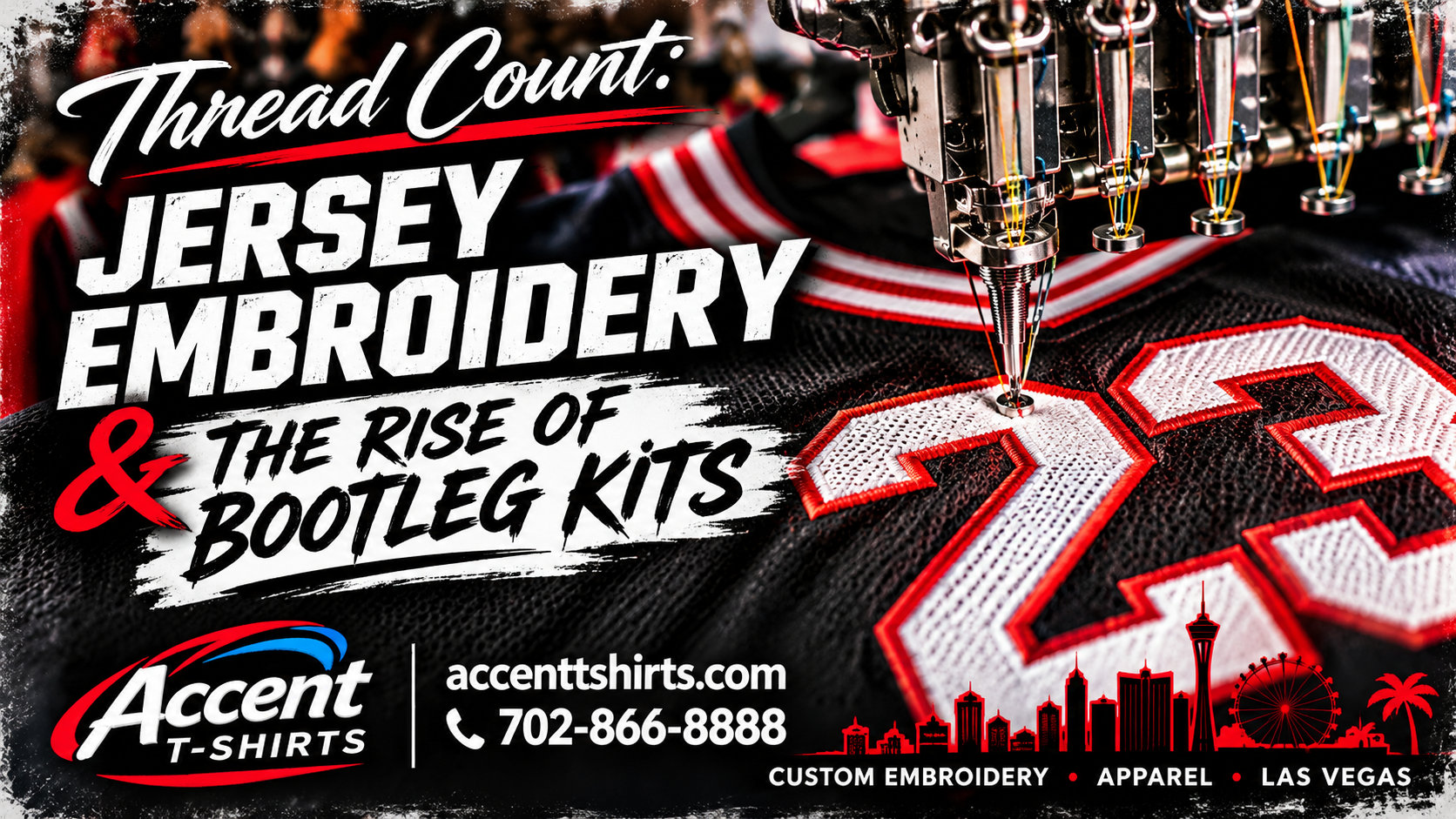
##Thread Count: How Jersey Embroidery and Bootleg Culture Shape Modern Sportswear
From football pitches to basketball courts, athletic jerseys have long moved past stadium stands to become dominant staples of everyday streetwear. Central to the appeal of a great jersey is its texture: the thick tackled twill, the dimensional patches, and the crisp, raised embroidery that give sportswear its premium, heritage weight.
At Accent T-Shirts, we study how tactile details transform basic apparel into iconic fashion. The evolution of jersey embroidery—and the sprawling underground world of bootleg kit culture—offers a fascinating look at how fan devotion, modern manufacturing, and street style intersect.
The Craft of Jersey Embroidery: Stitches vs. Heat-Press
Authentic athletic jerseys historically earned their value through complex embroidery and heavy-duty stitching. Unlike standard graphic t-shirts that rely on flat ink prints, high-end jerseys utilize multi-layer tackle twill, direct-to-garment embroidery, and dense satin stitching to apply numbers, team crests, and sponsor logos.
This high-density threadwork adds tactile depth and durability, ensuring the design survives rigorous movement and decades of washing. Over time, major manufacturers began shifting toward lightweight, heat-pressed synthetic vinyl patches to save costs and reduce garment weight for athletes. However, fashion-conscious fans quickly fought back. The tangible quality of raised embroidery remains the gold standard for anyone seeking a true retro or premium feel.
The Birth of the Bootleg Jersey Culture
As authentic embroidered jerseys climbed in price—and teams began updating their kits annually to drive sales—a massive secondary market emerged: the bootleg jersey.
Bootleg kits began as affordable, unauthorized replicas produced in overseas textile factories. Independent makers capitalized on the gap between expensive official merchandise and fan demand. Rather than just copying existing kits, subculture designers began creating "concept kits"—custom bootleg designs featuring imaginary sponsors, retro color combinations, and crossover pop culture embroidery that official brands would never produce.
What started as an underground alternative evolved into a legitimate fashion movement. Today, streetwear brands routinely collaborate with bootleg creators to launch limited-run embroidered soccer shirts, custom hockey jerseys, and repurposed vintage sportswear.
Heavyweight Fabrics and Streetwear Proportions
The structural demands of heavy embroidery influenced how modern jerseys fit. Because intricate stitch patterns and thick twill crests can cause lightweight polyester to pucker or drag, quality jerseys require heavyweight mesh, thick knits, or high-density cotton blends.
This need for structural integrity naturally aligns with modern streetwear aesthetics. The boxy, relaxed cuts, dropped shoulders, and substantial weight of vintage embroidered jerseys paved the way for modern oversized t-shirt silhouettes and cut-and-sew apparel. A well-embroidered jersey hangs with a distinct structure that lighter graphic tees simply cannot replicate.
The Lasting Legacy on Accent T-Shirts
The story of jersey embroidery and bootleg culture proves that apparel is driven by the community that wears it. Whether it is an officially licensed stitched crest or a bootleg concept kit featuring custom embroidery, high-quality threadwork turns a basic top into a wearable piece of sports history.
At Accent T-Shirts, we embrace that same spirit of texture, durability, and creative freedom. Wear garments that carry real weight, celebrate the craft behind the stitches, and wear your team colors your way