Blog
Don’t Toss Old T-Shirts: How to Turn Them Into Rags and Recycle Them the Right Way
01/16/2026
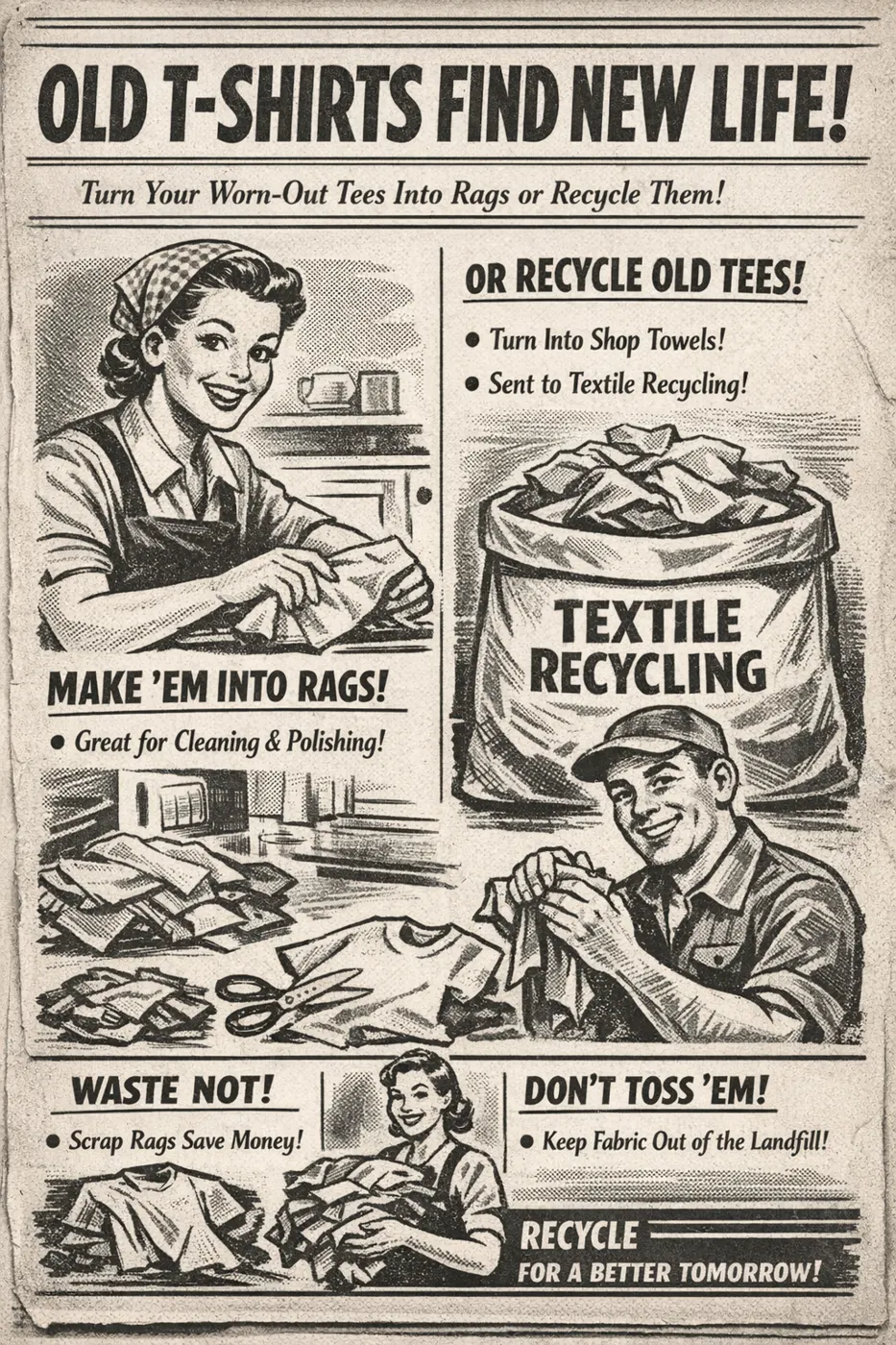
Most of us have a drawer (or a box) full of old t-shirts we don’t wear anymore—event tees, work shirts, faded favorites, shirts with cracked prints, or ones that just don’t fit like they used to.
The good news: t-shirts are one of the easiest textiles to reuse. With a little planning, those shirts can become cleaning rags, shop towels, packing material, craft supplies, or even recycled fiber—keeping fabric out of landfills and saving money at the same time.
This guide breaks down simple, realistic ways to reuse old t-shirts, plus what to do when they’re too worn out to be useful.
Why T-Shirts Make Great Rags
T-shirts are typically made from cotton or cotton blends, which makes them:
- soft and absorbent (great for wiping and polishing)
- low-lint compared to some towels (especially old, washed cotton)
- easy to cut into consistent pieces
- durable enough for messy jobs (paint, oil, grease, ink cleanup)
If you’ve ever bought shop rags in bulk, you already know the secret: many commercial rags are literally repurposed textiles.
Best T-Shirts to Use as Cleaning Rags (and Which to Avoid)
Great candidates
- 100% cotton tees
- soft, worn-in shirts (they absorb better after many washes)
- plain shirts with minimal thick ink
- shirts with small logos (you can cut around them)
Use with caution
- heavy plastisol screen prints (the ink area won’t absorb, but the rest of the shirt still works)
- performance polyester “dry-fit” shirts (less absorbent, but good for dusting or glass)
- shirts with glitter, puffy ink, or thick vinyl (can scratch delicate surfaces)
Skip for rags
- shirts with lots of thick decoration everywhere
- shirts contaminated with harsh chemicals (don’t reuse these for household cleaning)
How to Cut T-Shirts Into Rags (Fast and Clean)
You don’t need to get fancy. The goal is consistent pieces that are easy to grab.
Quick method
- Lay the shirt flat
- Cut off sleeves and collar (optional)
- Cut the body into rectangles
- small rags: ~8" × 8"
- medium rags: ~10" × 12"
- large rags: ~12" × 16"
Pro tip: Keep a “rag bin”
Use a plastic tote or bucket:
- “Clean rags” bin (ready to use)
- “Dirty rags” bin (ready to wash or dispose)
This keeps your shop or garage from turning into a fabric tornado.
What to Use T-Shirt Rags For
Different fabrics do different jobs well. Here are smart uses:
Household
- dusting furniture and blinds
- wiping countertops (non-food-safe cleaning)
- cleaning baseboards, doors, light switches
- polishing stainless steel (cotton works well)
- wiping mirrors/windows (use a smoother cotton tee)
Garage / shop
- oil and grease cleanup
- detailing vehicles (interior plastics, door jambs)
- wiping tools and workbenches
- stain/paint cleanup (especially water-based)
- cleaning screens and squeegees (if you print)
Moving / storage
- wrapping fragile items (glasses, ornaments)
- padding between dishes
- stuffing gaps in boxes so things don’t shift
Can You Wash and Reuse T-Shirt Rags?
Yes—most of the time.
Wash tips
- Wash rags separately from towels/clothes if they’re greasy
- Avoid washing heavily oily rags in hot water (can set stains and smell)
- If they’re used with solvents, paint thinner, or heavy chemicals, don’t wash at home—dispose safely according to local guidelines
Safety note (important)
If rags have oil-based products (like stain or certain paints), they can be a fire risk if piled up and left to heat up. If you’re using oil-based finishes:
- lay rags flat to dry outdoors
- store them in a metal container if needed
- follow product label disposal guidance
Turning Old Shirts Into “Shop Towels” for Events and Businesses
If you run a business (or help organize events), you can build an easy system:
- Put a small “retired shirt” bin in the break room
- Once a month, cut them into rags
- Use them in:
- cleaning routines
- equipment wipe-down
- packing and shipping
- production floors
It’s not glamorous, but it’s efficient—especially for shops that go through towels quickly.
What About Recycling T-Shirts Instead of Reusing Them?
When shirts are too worn, stretched, stained, or torn, recycling can be the better option.
Option 1: Textile donation (only if wearable)
If it’s still wearable, donate it. Many organizations route wearable items to people who need them.
Option 2: Textile recycling programs
Some cities and nonprofits accept textiles for recycling—even if they’re not wearable. Those items may be turned into:
- industrial wiping cloths
- insulation
- carpet padding
- recycled fiber products
Option 3: Retail take-back programs
Some clothing retailers run textile take-back bins. What they accept varies, but many allow:
- cotton
- mixed textiles
- worn clothing (not just “nice” donations)
Option 4: Local thrift stores (ask first)
Some thrift stores accept torn or stained textiles for rag/fiber routes; others won’t. A quick call saves time.
The Print and Ink Question: Does Screen Printing Affect Recycling?
It can, but it doesn’t mean the shirt is “non-recyclable.”
- Many textile recycling streams can still accept printed garments.
- Thick vinyl or heavy specialty coatings may reduce recyclability in certain programs.
- For rag use, printing mainly affects absorbency on the inked area.
Bottom line: even heavily printed shirts can still be useful as rags if you cut around the thick print areas.
5 Easy “Recycled T-Shirt” Ideas Beyond Rags
If you want to reuse shirts in a more creative way:
- T-shirt tote bag (no sewing versions exist—just cut and tie)
- Pet bedding stuffing (stuff scraps into a pet pillow cover)
- T-shirt yarn (crafty, but great for rugs and baskets)
- Dust covers for tools or seasonal items
- Packing wraps for shipping fragile products
A Simple “T-Shirt Reuse Rule” That Works
Use this decision guide:
- Still wearable? → donate or gift
- Not wearable, but clean fabric? → cut into rags
- Too damaged for rags? → textile recycling
- Contaminated with chemicals/oil-based solvents? → dispose safely per product guidance
Final Thought: Old Tees Are Useful Material, Not Trash
If you’re printing shirts for an event or business, it’s worth thinking about the full life of the garment. T-shirts don’t have to be a one-time thing—especially when they can become rags, padding, or recycled fiber later.
A small system—one bin, one monthly cut-up session—can keep a surprising amount of textile waste out of the trash and save you money on cleaning supplies.
T-Shirt Printing Near Me in Las Vegas: What to Look For (and Why Local In-House Matters)
If you’ve searched “tshirt printing near me” in a rush—trying to get shirts ready for a convention, school event, team, employee uniforms, or a last-minute client request—you already know the results can be all over the place.
Some companies are true production shops. Others are brokers who send your order elsewhere. Some specialize in one method but don’t tell you that up front. And a lot of people don’t realize how much quality and turnaround depends on one thing:
Is the printing (and embroidery) actually done in-house, locally, by a real shop you can visit?
At Accent T-Shirts, we’ve been a Las Vegas t-shirt printer since 1999, and we produce in-house so customers get:
- clearer proofs
- better consistency
- realistic timelines
- and a faster path from “idea” to “in hands”
Below is a straightforward guide to help you pick the right shop—especially if you need a reliable screen printer Las Vegas companies can count on, plus professional embroidery Las Vegas teams want to wear with pride.
1) What “T-Shirt Printing Near Me” Should Actually Mean
When most people search tshirt printing near me, they’re usually looking for at least one of these:
- Speed: “I need it soon.”
- Quality: “I don’t want this to look cheap.”
- Consistency: “We need 50–500 shirts that all match.”
- Help: “I’m not sure which method is best.”
- Convenience: “I want a local Las Vegas shop I can call, visit, and trust.”
A true local print shop should be able to:
- show you garment samples
- help you choose the right print method
- provide a proof that matches what you’ll receive
- give you transparent production timelines
- and deliver consistent results across sizes and garment types
2) Screen Printing vs Embroidery: Which Should You Choose?
If you’re comparing a screen printer Las Vegas options list with embroidery shops, here’s a simple way to decide:
Screen printing is best for:
- event t-shirts (runs, conventions, school events)
- large quantities where cost per shirt matters
- bold designs that need strong color
- full front and full back prints
- consistent, durable prints that hold up wash after wash
Screen printing is often the most economical choice for 24+ pieces (and especially 50+), depending on the design.
Embroidery is best for:
- polos, hats, jackets, uniforms
- business logos that should look professional and premium
- workwear that takes daily abuse
- left chest logos and clean branding
When people search embroidery Las Vegas, they’re often looking for that stitched, uniform look—especially for teams that want to show up looking put together.
What about DTF and DTG?
These methods are great for certain situations:
- small runs
- highly detailed full-color designs
- quick reorders
- personalization and multi-name jobs (depending on garment)
A good Las Vegas t-shirt printer should explain the options clearly and recommend what fits your timeline, budget, and design—not force everything into one method.
3) Why In-House Production Matters (More Than Most People Realize)
Not all “near me” results are actually local production.
Some companies:
- take your order in Las Vegas
- then outsource printing to another city or state
- then ship it back (adding time and risk)
In-house production matters because it improves:
- Turnaround: fewer handoffs, fewer delays
- Quality control: real checks during production (not just when boxes arrive)
- Proof accuracy: what you approve is what gets produced
- Problem solving: if something needs adjusting, it happens fast
- Consistency: matching ink/thread colors across multiple items and reorders
If you’re ordering shirts for something that can’t miss—like a convention, corporate event, or school fundraiser—this is a big deal.
4) What to Ask Any Screen Printer in Las Vegas Before You Order
If you’re trying to choose the right screen printer Las Vegas businesses recommend, ask these simple questions:
- Do you produce in-house or outsource?
- What’s your typical production time after approval + payment?
- Do you send a proof before printing?
- What print method do you recommend for my design and quantity?
- Can you help with garment selection (soft tees, polos, hoodies, etc.)?
- Do you offer rush options if needed?
- Can you handle delivery logistics (hotels, venues, conventions)?
A shop that answers clearly and confidently is usually a shop that will deliver what they promise.
5) What to Ask an Embroidery Shop in Las Vegas Before You Order
Embroidery looks amazing when done right—but jackets, hats, and thick garments require experience.
If you’re comparing embroidery Las Vegas options, ask:
- Can you stitch this logo cleanly at left chest size?
- Will small text be readable, or should it be simplified?
- What file type do you prefer (AI/EPS/SVG, PDF, PNG)?
- Do you offer sewouts or sampling for large orders?
- Do you provide guidance on thread colors and placement?
Embroidery is “premium branding,” and it should be treated that way—especially for uniforms.
6) The Most Common Reasons Shirt Orders Go Wrong (And How to Avoid It)
Here are the top issues we see in rushed orders:
The artwork isn’t production-ready
A small PNG pulled from a website might look okay on-screen but won’t print cleanly. The fix is simple: provide a vector file if possible (AI/EPS/SVG/PDF), or let the shop clean it up properly.
The print size and placement weren’t clarified
“Front logo” can mean many things. A good shop will specify placement like:
- left chest
- full front
- full back
- sleeve print
and give you a proof that matches.
The garment choice doesn’t match the job
The cheapest shirt might not be the best if the goal is a premium brand look. If you want “soft retail feel,” say so. If you want “budget event tee,” say so.
Timelines aren’t realistic
A reliable shop will give you an honest timeline based on approvals, payment, garment availability, and production load.
7) Why Las Vegas Businesses Choose Local Printing for Events and Uniforms
Las Vegas has unique needs:
- conventions
- hotel deliveries
- venues with receiving docks
- event-day deadlines
- last-minute changes
- frequent reorders for staff and departments
A true local Las Vegas t-shirt printer understands:
- how to label boxes by size
- how to prep orders for event logistics
- how to coordinate delivery windows
- how to keep reorders consistent when the same client comes back every month
That’s where in-house production and local experience really show.
8) Getting a Fast, Accurate Quote (What to Send)
If you want the quickest, cleanest quote—send this:
- quantity + size breakdown
- garment type (tee, hoodie, polo, hat, jacket)
- garment color(s)
- print locations (left chest, full back, sleeve)
- number of ink colors per location (or “use best method”)
- your deadline / in-hands date
- your logo file (vector preferred)
This cuts the back-and-forth and gets you a proof faster.
Ready for a Quote in Las Vegas?
If you’re looking for tshirt printing near me and you want a local shop that produces in-house, Accent T-Shirts can help with:
- screen printing
- embroidery
- event and convention apparel
- uniforms and workwear
- rush options when timelines get tight
Accent T-Shirts
2545 E. Chandler Ave. Ste. 11, Las Vegas, NV 89120
Phone: (702) 866-8888
Written by Lindy Williams
Lindy Williams is the owner of Accent T-Shirts / Accent Promotions & Media, a Las Vegas custom apparel company established in 1999. Lindy has spent decades helping local businesses, schools, event planners, and organizations produce professional apparel with reliable turnaround—specializing in in-house screen printing and embroidery for uniforms, events, conventions, and branded merchandise. With a hands-on approach to production and quality control, Lindy focuses on making the ordering process simple, clear, and dependable from proof to final delivery.