Blog
Current Trends in Blue-Collar Uniforms and Branded Workwear (HVAC, Construction & More)
05/28/2025
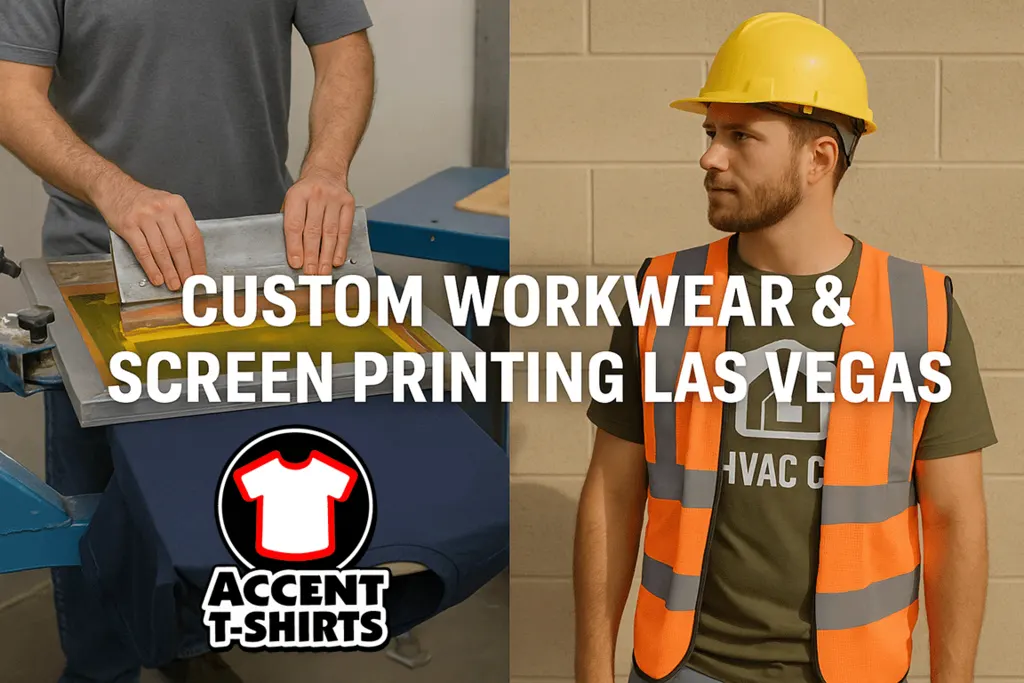
Blue-collar workwear for industries like HVAC, welding, plumbing, and construction has evolved to balance functionality with branding and professionalism. Modern uniform trends focus on durable materials, comfort, and sharp branding through screen printing and embroidery. Companies are investing in uniforms not just for safety and utility, but to reinforce their brand image and present a professional appearance on the job site. In this post, we’ll explore how screen printing and embroidery are being used in today’s work uniforms, what types of garments and materials are popular, and what market demand looks like – including local search trends in places like Las Vegas.
Branding, Professionalism, and Durable Uniforms in the Trades
For service technicians and construction crews, a well-designed uniform does more than just cover the body – it builds trust and brand recognition. When employees arrive in matching, branded apparel, it reassures clients that “the right people showed up at their door,” enhancing customer confidenceprintit4less.com. In 2024 and 2025, businesses are increasingly using uniforms to showcase their logos, company names, and colors in a cohesive way, strengthening their brand identity on every jobthelaundrybrothers.comleelinework.com.
Professionalism is a key benefit: a crisp polo or work jacket with an embroidered logo immediately looks organized and credible. Uniforms create a team appearance and can even boost employee morale and accountability (many companies add individual name patches or embroidered name tags for a personal touchthelaundrybrothers.com). At the same time, the workwear itself must be tough and functional. Tradespeople often work in rugged, dirty, or hazardous environments, so their clothing needs to withstand heavy use, protect them, and remain comfortable. Modern work uniforms are built with features like reinforced seams, high-performance fabrics, and protective treatments to ensure longevity and safetymetapress.com. In sum, today’s trend is “branded durability” – uniforms that project a professional image while standing up to rough conditions.
Screen Printing & Embroidery: Key Customization Methods
To get logos and other branding onto work apparel, screen printing and embroidery are the two primary methods – each with distinct advantages. Both are widely used across HVAC, construction, and other trades to display company names, logos, and even safety slogans. Here’s how they contribute to branding, durability, and professionalism:
Screen Printing: This technique uses ink pressed through a mesh stencil to print designs directly onto fabric. It’s ideal for bold, large logos or text – for example, a big company name across the back of a tee or safety vest. Screen printing is very popular for t-shirts, high-visibility shirts, and other smooth-surface garments. One reason is cost-effectiveness: for large batches of uniforms or giveaways, screen printing is budget-friendly, especially compared to stitching large designs. Despite its lower cost, quality screen printing can be quite durable – the layered inks create a print that withstands friction and frequent washing. In fact, screen prints can remain vibrant for years when done properly, as thick ink layers “hold up well…withstand friction” over numerous wash cyclesmorningstartshirts.com. This makes screen printing a reliable choice for work shirts, hoodies, and uniforms that see daily wear. However, prints may eventually show cracking or fading after heavy use, so using good ink and curing processes is important for longevity. In terms of image, screen printed designs give a clean, flat look and can incorporate bright colors or complex logos (though extremely fine details are sometimes better done with other methods). Many construction and HVAC companies use screen-printed t-shirts and safety apparel to outfit crews in a consistent look that also pops with company branding.
Embroidery: Embroidery involves using specialized machines to stitch threads into the garment, forming logos or text with a textured, 3D quality. It is commonly used on polos, button-down work shirts, jackets, and caps – items where a small to medium logo on the chest, sleeve, or back adds a high-end touch. Embroidered logos are prized for their professional appearance and durability. The stitching literally becomes part of the garment, so there’s no risk of design peeling off. In fact, embroidered logos often last as long as the garment itself, even under tough conditions. This makes embroidery perfect for heavy-duty uniform pieces: “Embroidered logos last longer on heavy-duty materials,” whereas prints might not adhere as well to those tough fabricsmetapress.com. For example, on thick canvas work jackets or coveralls, an embroidered patch or directly stitched logo will endure years of abrasion and washing. Embroidery also uses colorfast polyester threads that resist fading – providing vibrant, long-lasting color for logosallstarlogo.com. Visually, embroidery conveys a sense of quality and professionalism; a neatly stitched emblem on a technician’s shirt or hat looks authoritative and upscale. The trade-off is usually cost and size – embroidery is more labor-intensive and thus often reserved for smaller logo placements (e.g. a chest logo or name tag) rather than large full-back designs. Many companies choose a combination approach: for instance, a small embroidered logo on the front of a polo for a polished look, and a large screen-printed graphic on the back of a t-shirt for visibility. By using each method where it excels, businesses ensure their uniforms are both durable and eye-catching. (Notably, in rugged industries, embroidery is sometimes preferred despite higher cost because of its longevity; screen printing, on the other hand, “offers a cost-effective option for large-scale workwear orders” when outfitting big teams or doing bulk orders of items like construction tees.)
Both screen printing and embroidery contribute to the branding aspect by displaying the company logo or name prominently. This consistent branding turns work crews into walking advertisements and helps clients immediately identify staff. Durability is addressed by choosing the right method for the right garment – heavy workwear often gets embroidery for maximum longevity, while lighter or high-volume items get durable screen prints. In terms of professionalism, embroidery often gives a slightly more formal look (great for customer-facing staff uniforms), while screen printed apparel offers a crisp and uniform appearance suitable for the whole crew. The trend across the board is that companies are leveraging these customization techniques more than ever to create unique, branded workwear that can handle the demands of the job leelinework.com.
Popular Uniform Garments, Materials, and Design Features
What kinds of apparel are tradespeople wearing and customizing in 2025? A variety of garment types are being used as uniforms, from classic tees to technical jackets, depending on the job and climate. Below is a look at some of the most popular uniform pieces for HVAC technicians, plumbers, welders, and construction workers – along with their preferred materials and customization trends:
| Uniform Garment | Common Materials & Features | Customization & Usage |
|---|---|---|
| T-Shirts | Cotton or poly-cotton blends; also newer moisture-wicking polyester fabrics for hot weather thelaundrybrothers.com. Lightweight and breathable. | Usually screen-printed logos (e.g. large company name on back, small logo on chest). Ideal for warm climates and physical work – e.g. construction crews on summer days or HVAC techs in attics. Cost-effective to produce in bulk; often used as a base layer or daily work shirt. |
| Polo Shirts | Polyester/cotton blend or performance poly knit (breathable, quick-dry). Often with a bit of stretch for comfort. | Typically embroidered logos on the chest for a professional lookthelaundrybrothers.com. Sometimes individual names are embroidered on the opposite side. Polos are popular for HVAC and plumbing staff who interact with customers – they present a clean, uniform appearance while remaining comfortable. Many companies choose polos in brand colors to reinforce identity. |
| Button-Down Work Shirts (Mechanic shirts) | Heavy-duty cotton or poly-cotton twill (durable weave), sometimes with rip-stop patterns for tear resistance. Often short-sleeved for mobility. | Customized with embroidered name patches and embroidered or screen-printed company logos on front or back. These shirts (e.g. Dickies or Red Kap styles) are common in plumbing, electrical, and HVAC fields for a classic, professional tradesman look. They feature reinforced stitching and can endure frequent wash and wear. |
| Jackets and Outerwear | Canvas duck cotton (for classic work jackets), or modern softshell and fleece (polyester) for warmth and flexibility. May include water-resistant or insulated linings. | Typically embroidered logos on the chest or sleeve (heavy fabrics handle embroidery well). For construction and outdoor work, high-visibility jackets with reflective strips are common, often in neon colors with the company name printed or embroidered on themmetapress.com. Branded hoodies and fleece zip-ups are also trendy as layered uniform pieces for cooler weathersuperiorinkprinting.com. These not only keep workers warm but extend the company branding into the colder months. |
| Hi-Vis Safety Apparel | Bright neon polyester (mesh vests or tees) with silver reflective tape (meeting safety standards). Lightweight, breathable. | Screen printed company logos or names on hi-vis vests and shirts are popular so that even safety gear carries branding. This is crucial on construction sites or roadside jobs – the reflective clothing keeps workers safe while also identifying the company to observersmetapress.com. (Some logos can be made with reflective ink or transfers as well.) Safety t-shirts with logos on back and front combine compliance with marketing. |
| Coveralls & FR Gear | Flame-resistant (FR) treated cotton, Nomex®, or other ARC-rated fabrics for welders and electricians; heavyweight cotton coveralls for general dirty work. | Customization is trickier due to safety requirements, but embroidered patches or direct embroidery with special fire-resistant threads are used for logos and name tags. (FR uniforms must maintain their ratings, so any added embroidery thread must be FR-rated as well.) Welders’ jackets and coveralls often feature a simple company logo on the chest or back. Screen printing on FR material is less common, but when done, it requires special processes so as not to compromise flame resistance. Branding these garments ensures even workers in extreme conditions display a professional, unified look. |
As the table shows, companies are customizing everything from basic tees to specialized safety gear. Some additional trends stand out across these uniform choices:
Performance and Comfort Materials: There’s a big push toward “performance” workwear fabrics that offer comfort during long, active shifts. Moisture-wicking polos and tees, stretch-fiber pants, and breathable mesh panels are becoming common. For instance, moisture-wicking and ventilated designs help prevent overheating while allowing freedom of movementmetapress.com – a welcome trend for those laboring in hot attics or under the sun. Similarly, “four-way stretch” fabrics and flexible knits are appearing in uniforms to improve mobilitythelaundrybrothers.com. Even traditionally stiff items (like uniform polos) are now available in softer, more flexible materials so technicians can crouch, lift, and reach comfortably. The mantra in 2025: if the gear isn’t comfortable, it’s not going to be worn happily – so comfort is mandatory in uniform designs.
Durability and Protection: Heavy-duty construction is non-negotiable for blue-collar uniforms. Garments are designed with features like reinforced stitching, bar-tacked stress points, and rip-stop weaving to prevent tearsmetapress.com. Popular fabrics include sturdy cotton drills and poly-cotton blends that can survive the grind of daily usemetapress.com. In construction and industrial settings, safety features are integrated: high-visibility neon colors with reflective strips (meeting safety standards) are often required on outerwearmetapress.com. For welders and certain electrical or oilfield jobs, flame-retardant (FR) clothing is essential – we see more uniforms using fabrics that self-extinguish or resist igniting, keeping workers safemetapress.comthelaundrybrothers.com. Companies are customizing these safety garments too (with caution) because even on a safety vest, a logo helps reinforce the brand. The overall trend is workwear that “balances branding with performance,” giving crews the protective qualities they need without sacrificing the company’s visibility or the apparel’s longevity.
Modern Design Aesthetics: Interestingly, uniform design is also getting more stylish and thoughtful. Rather than plastering a huge logo on a cheap shirt, some companies now opt for a cleaner look – perhaps a tonal (low-contrast) logo, or subtle use of brand colors as trim on the shirtsuperiorinkprinting.com. According to industry observers, “today’s uniforms are simplified and clean with intentional pops of color or texture…using embroidery and tonal prints instead of huge logos”superiorinkprinting.com. The idea is to create a professional, modern look that employees feel proud wearing. This can even blur into casual fashion: for example, a well-designed branded hoodie or hat that workers might wear off the clock because it looks good and feels good. If employees willingly sport their company’s jacket to the grocery store or on a weekend, that’s a win-win – they’re comfortable and the company gets free advertisingsuperiorinkprinting.comsuperiorinkprinting.com. In short, uniforms are becoming more versatile and attractive, sometimes offered as a range of coordinated items (tees, zip-ups, caps, etc.) that staff can mix and match while still presenting a unified brand imagesuperiorinkprinting.comsuperiorinkprinting.com. This flexibility is especially valued in climates like Nevada’s, where a day can start chilly (jacket on) and end hot (tee underneath). Companies now provide layers – e.g. branded fleeces or quarter-zips for cool mornings – that can be shed as neededsuperiorinkprinting.com. Such capsule collections of uniform items keep teams both comfortable and consistently branded year-round.
Market Demand and Search Trends for Custom Apparel in Las Vegas
Demand for custom-printed and embroidered workwear is robust – and we can even see it in online search trends. In a hub like Las Vegas, with its booming construction industry and countless businesses, many people are searching for local custom apparel services. Popular search queries include “custom t-shirts Las Vegas,” “screen printer Las Vegas,” and “embroidery Las Vegas,” among others. These indicate a healthy market of companies and individuals looking to order branded apparel in the area. In fact, local print shops in Vegas advertise offerings like “1-hour custom t-shirt printing” and no-minimum orders, which speaks to the high demand for quick, local service.
One notable trend in how people search for these services is the use of “near me” and other location-based keywords. Many users will search for terms like “screen printing near me” or “embroidery near me” on their phones when they need fast turnaround or want to visit a nearby shop. The prevalence of “near me” searches has skyrocketed in recent years – nearly 46% of all Google searches now have local intent, and queries containing “near me” have risen dramatically over the past decadesoci.ai. This means a significant portion of customers are looking for convenient, nearby solutions for their custom apparel needs. In a city as spread out and tourist-driven as Las Vegas, being visible in local search is crucial for print shops.
To illustrate the market demand, here are a few key search terms and what they signify:
“Custom t-shirts Las Vegas” – Often searched by event planners, convention organizers, and local businesses in need of personalized T-shirts. Las Vegas hosts numerous events (trade shows, concerts, corporate retreats), fueling a high demand for custom tees. This keyword’s popularity suggests a steady stream of customers seeking bulk T-shirt printing in the region. Local businesses also use this search to find providers who can brand shirts for their staff or promotions. (It’s common to see construction firms and HVAC companies printing their logo on casual t-shirts for employees, hence overlapping with workwear needs.)
“Screen printer Las Vegas” – This query indicates that users (likely business owners or managers) are actively seeking screen printing services in Vegas. They might have a specific project in mind – e.g. printing company logos on uniforms, making team shirts, or producing merchandise. The specificity of “screen printer” (as opposed to just “t-shirts”) implies the searcher knows the printing method they want, or is comparing service providers. The volume of this search reflects a competitive local industry: many screen printing shops operate in Las Vegas, and businesses are shopping around for quality and price. It underscores that screen printing is in high demand for everything from work uniforms to event apparel.
“Embroidery Las Vegas” – Users searching this are often looking for a shop that can do embroidered apparel or items. This includes things like embroidered polos, hats, patches, or uniforms – exactly the kind of higher-end branding needed for professional workwear. The popularity of this term points to strong demand among companies (restaurants, casinos, construction firms, etc.) for embroidered logos on uniforms and gear. It may also include individuals needing things like custom embroidered shirts or jackets (for clubs, sports teams, etc.), but a large share is likely commercial. Embroidery being a sought-after service in Vegas means businesses value that polished look on their uniforms. It’s worth noting that many local print shops offer both printing and embroidery to cater to all needs, and customers will search accordingly.
“<service> near me” (e.g. “custom t-shirts near me”) – As mentioned, the inclusion of “near me” in searches has become extremely common. Consumers want convenience and speed, and search engines have trained them to expect local results by using this phrase. In Las Vegas, someone might search “embroidery near me” on their phone to find the closest shop that can stitch a batch of uniforms, or “t-shirt printing near me” to get a last-minute order done. These searches often lead to map listings, reviews, and quick calls to a shop. The trend is so pronounced that “near me” searches grew by hundreds of percent in just a few years with the rise of mobile searchsoci.ai. For the local custom apparel market, this means having an online presence optimized for local search (Google Maps, Yelp, etc.) is vital. The continued high volume of “near me” queries is a direct indicator of market demand – people actively looking for nearby vendors implies they need the service now or prefer to deal locally rather than online-only vendors.
Overall, the search trends mirror what we see on the ground: strong and growing demand for custom uniforms and apparel, especially at the local level. Las Vegas, with its mix of industries (hospitality, construction, entertainment), has a particularly high demand – from casinos outfitting staff in branded uniforms, to construction firms printing safety shirts, to small HVAC businesses ordering embroidered polos. The fact that so many users search these terms (and that many businesses advertise around them) shows that investing in branded workwear is a priority for many organizations. It’s not just a minor expense; it’s part of marketing and operations. For companies in the blue-collar field, keeping up with these uniform trends – and knowing where to get quality screen printing or embroidery – can provide a competitive edge in professionalism and brand visibility.
Conclusion
The landscape of blue-collar workwear is continually advancing. Current trends highlight uniforms that are comfortable, durable, and meticulously branded. HVAC technicians, welders, plumbers, and construction crews today might be outfitted in moisture-wicking shirts with bright company logos, or sturdy canvas jackets with embroidered emblems – all designed to survive the job and showcase a unified brand. Screen printing and embroidery play a central role in these uniforms, marrying brand identity with practical needs. Embroidered logos give longevity and a classy touch on tough garments, while screen-printed designs offer vibrant, cost-effective branding on everything from tees to safety vests. Companies are also paying attention to the materials and features of the garments themselves – opting for tear-resistant fabrics, high-visibility colors, and even eco-friendly textiles – to ensure workers have the best gear for the task.
Crucially, the push for professional, branded uniforms is backed by clear market demand. Businesses know that a polished appearance and consistent branding can set them apart, and they are actively seeking out custom apparel services (as evidenced by the high volume of local searches for printing and embroidery). In industries where trust and first impressions matter – imagine a technician arriving at a client’s home – a good uniform is worth its weight in gold. It conveys competence, unity, and reliability. As we move forward, we can expect blue-collar uniforms to continue evolving with new fabric technologies and design innovations, but the core goals will remain: boosting durability, safety, and professionalism while proudly displaying the brand. Investing in quality workwear is not just about dress code – it’s a strategic move that enhances company image and ensures employees can do their jobs comfortably and safely, day in and day out.
In summary, whether you’re a construction firm in Las Vegas outfitting your crew or a plumbing company updating your technicians’ shirts, staying on top of these workwear trends will help you equip your team with uniforms that perform well and look the part. Branded workwear is more accessible than ever, and done right, it leaves a lasting impression – on your customers, on the public, and on the overall success of your business. Durable, branded uniforms truly give blue-collar professionals a chance to wear their pride on their sleeve (literally!), showcasing who they work for and the quality they stand for.
Sources:
The Laundry Brothers – “Top Trends in Workwear Uniforms: Combining Style, Comfort, and Durability in 2024.” (performance fabrics, custom branding trend)thelaundrybrothers.comthelaundrybrothers.com
PrintIt4Less – HVAC Company Shirts with Logo. (importance of uniforms for customer confidence)
Metapress – “How Does Branded Workwear Fare in the Harsh and Rugged Worksite?” (durability features, hi-vis, embroidery vs. screen print)metapress.com
Morningstar Screen Printing – “What is the Most Durable T-Shirt Printing Method for Lasting Wear?” (screen printing durability)
AllStar Logo – “Ultimate Guide to Customizing Work Uniforms” (embroidery method and thread resilience)
Leeline Work – “9 Workwear Trends… 2025.” (personalization and unique embroidery trend)
Superior Ink – “Top Corporate Uniform Trends for 2025.” (modern uniform design, comfort and style trends)superiorinkprinting.comsuperiorinkprinting.com
SOCi Local SEO Statistics 2024 – (local search & “near me” query growth data)
construction and HVAC apparel