
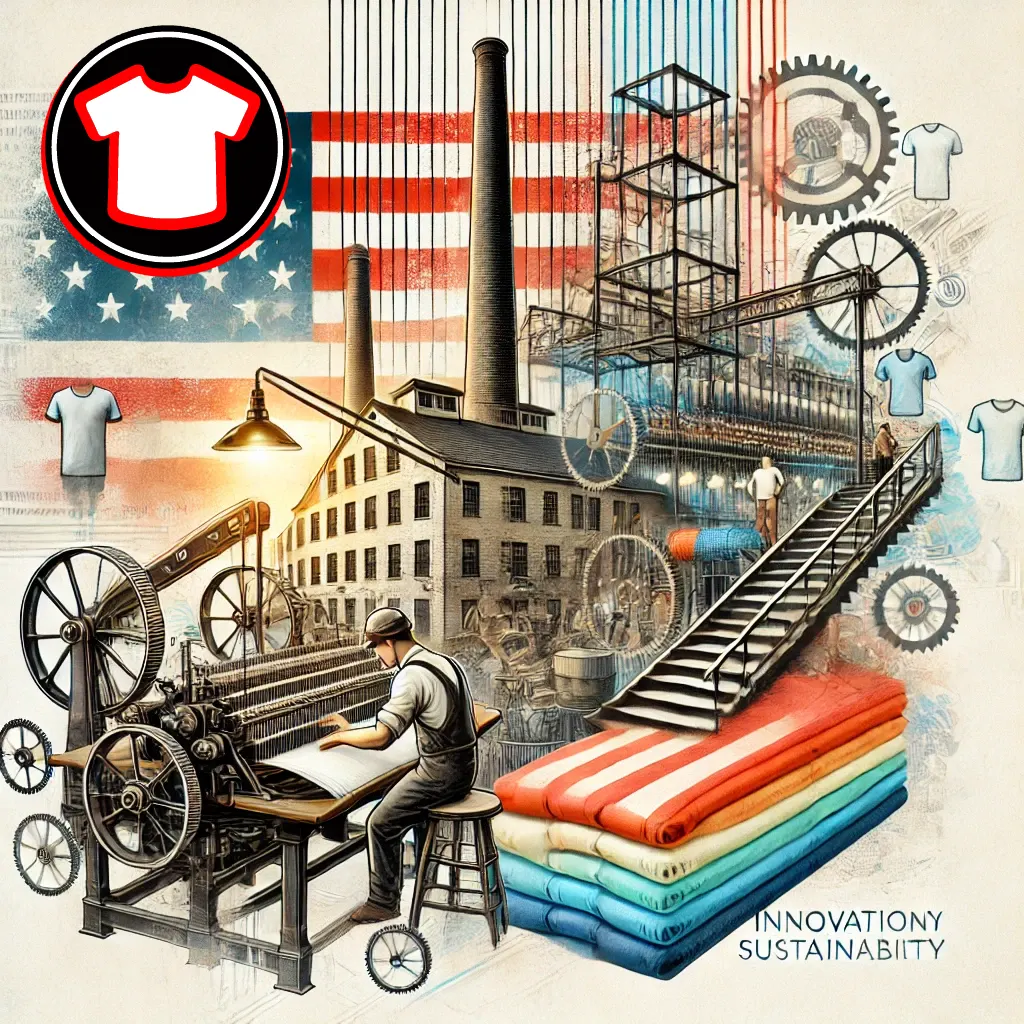
Once upon a time, the United States was a hub of textile and t-shirt production. From the bustling mills of the Northeast to the factories of the South, the textile industry played a central role in shaping the nation's economy and culture. These mills not only clothed Americans but also became the backbone of industrial towns, employing generations of workers. However, the era of thriving t-shirt and textile mills in the U.S. eventually came to an end. Let’s take a closer look at this fascinating journey.
The Boom of the Textile and T-Shirt Mills
The textile revolution in the U.S. began in the early 19th century, with mills primarily located in New England. Towns like Lowell, Massachusetts, became synonymous with textile production. These mills churned out everything from fabrics to ready-made garments, including t-shirts—a staple that would grow in popularity throughout the 20th century.
In the 1950s and 1960s, the South emerged as a major player in the textile industry, thanks to lower labor costs and proximity to cotton fields. Factories in states like North Carolina, South Carolina, and Georgia began mass-producing t-shirts for everyday wear, sports teams, and businesses. These mills thrived on innovation, introducing automated looms and faster production techniques to meet the booming demand for affordable clothing.
The Decline of the Mills
Despite their strong start, U.S. textile mills began to decline in the late 20th century. Several factors contributed to this downturn:
Globalization: The rise of international trade agreements made it more cost-effective for companies to outsource manufacturing to countries with cheaper labor, such as China, India, and Bangladesh.
Automation: While automation initially helped mills stay competitive, it eventually reduced the number of jobs available, leading to economic challenges for mill towns.
Changing Consumer Trends: Fast fashion and the demand for ever-cheaper products shifted manufacturing overseas, where materials and labor costs were significantly lower.
By the 1990s, many iconic textile mills in the U.S. had closed their doors. This marked the end of an era for small towns that had once revolved around the hum of sewing machines and the clatter of looms.
What Remains Today?
Though the heyday of U.S. t-shirt and textile mills has passed, the legacy of these mills lives on. A few specialty manufacturers and brands continue to produce textiles domestically, often focusing on sustainable practices and premium quality. Additionally, a growing interest in supporting local businesses and ethical production has sparked a resurgence of small-scale American-made apparel companies.
How Do We Build It Back Better?
Rebuilding the U.S. t-shirt and textile industry is a challenging but achievable goal. Here are a few key strategies to revitalize and improve domestic production:
Invest in Innovation: Leveraging advanced manufacturing technologies, such as automation and AI, can help reduce costs and make U.S. mills competitive with overseas counterparts.
Focus on Sustainability: With growing demand for eco-friendly products, emphasizing sustainable fabrics, water-efficient dyeing techniques, and renewable energy in mills can attract conscious consumers.
Government Incentives: Tax breaks, grants, and subsidies for domestic manufacturers can make it financially viable for businesses to produce textiles in the U.S.
Support Local Businesses: Encouraging consumers to buy American-made products can create a market for locally produced apparel, fostering growth in the industry.
Reskilling Workers: Providing training programs to help workers adapt to modern manufacturing methods ensures a skilled workforce ready to support the industry’s resurgence.
By combining innovation, sustainability, and community support, the U.S. can bring back textile production in a way that’s better for workers, the economy, and the planet.
Why It Matters
The story of t-shirt and textile mills in the United States is a testament to the country’s industrial ingenuity and the resilience of its workers. While globalization changed the landscape of manufacturing, it also serves as a reminder of the importance of fair trade, ethical sourcing, and sustainable practices in today’s fashion industry.
So, the next time you slip on your favorite t-shirt, take a moment to appreciate the rich history behind this humble garment. From the mills of New England to the sweat of Southern factory workers, it’s a piece of Americana stitched into every seam.
Conclusion
Want to learn more about the history of t-shirts or explore custom-made apparel? Contact us at Accent T-Shirts for high-quality, personalized designs that honor the timeless tradition of American craftsmanship.

Written by Lindy Williams, Founder of Accent Promotions & Media in Las Vegas, NV—specializing in t-shirt printing, embroidery, and promotional products since 1999.