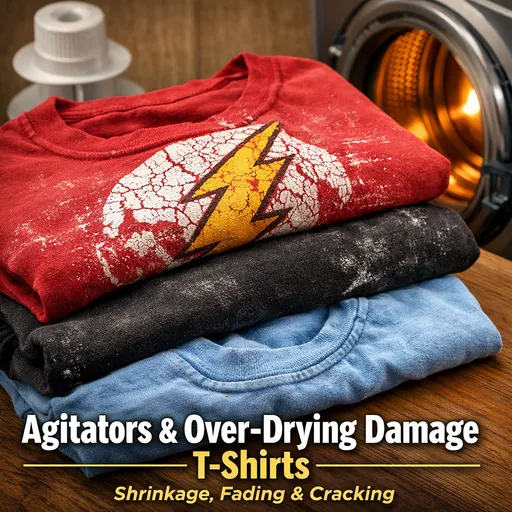
Learn how washing machine agitators and over-drying can ruin t-shirts by causing shrinkage, fading, cracking, stretching, and fabric damage. Protect your custom shirts with better care tips.
A good t-shirt can do a lot of work. It can represent your brand, promote your event, support your team, or simply be a favorite shirt you reach for all the time. But even a high-quality shirt can wear out faster than it should if it is washed and dried the wrong way. Two of the biggest causes of early t-shirt damage are washing machine agitators and over-drying.
Most people do not think much about laundry when they buy custom apparel. They focus on the design, the print, the fit, and the color. But shirt care matters just as much after the sale. If a shirt is washed aggressively or exposed to too much heat, the fabric can weaken, the fit can change, and the print can start to crack or fade. That means a shirt that should have looked great for a long time can suddenly look old after only a few wash cycles.
At Accent T-Shirts, we work with custom apparel every day, and we know that good care makes a real difference. Here is what happens when agitators and over-drying take a toll on your shirts, and how to help your t-shirts last longer.
What a Washing Machine Agitator Does
A washing machine agitator is the center post found in many top-load washers. Its job is to move clothing around during the wash cycle. That motion helps loosen dirt and stains, but it can also be rough on t-shirts.
Unlike gentler wash systems, an agitator twists, rubs, and pulls fabric more aggressively. That repeated friction may not seem like a big deal during one wash, but over time it can create noticeable wear. T-shirts are especially vulnerable because many are made from soft cotton, cotton blends, ring-spun fabric, or lightweight fashion tees. These materials feel great to wear, but they can be more sensitive to harsh laundry conditions.
How Agitators Damage T-Shirts
The first problem is fabric stress. When shirts wrap around the agitator, they can stretch in odd directions. This can affect the collar, sleeves, side seams, and overall shape of the shirt. Instead of holding its original fit, the shirt may start to look twisted or uneven.
The second problem is surface friction. Agitators can cause shirts to rub against the washer drum, other garments, and the agitator itself. This can lead to pilling, fuzziness, and thinning fabric. Dark shirts may start to look dull. Softer shirts can lose that clean, smooth finish people like.
The third issue is damage to printed designs. If you have a screen printed shirt, DTF transfer, DTG print, or other printed graphic, aggressive washing can wear down the ink surface faster. While good printing methods are made to last, constant twisting and rubbing can still speed up cracking, flaking, or fading.
This is especially important for custom apparel used by businesses, schools, sports teams, and event staff. If the shirts are part of your company image, you want them looking clean and professional for as long as possible.
Why Over-Drying Is So Hard on Shirts
Heat is one of the biggest enemies of a t-shirt. When shirts are dried too long or at too high a temperature, the heat can damage both the fabric and the print.
Many people assume the dryer is harmless as long as the shirt comes out dry. But over-drying goes beyond drying the moisture out of the garment. It keeps applying heat after the shirt is already dry, which creates extra stress on the fibers. That is when shrinkage, brittleness, and fading become more likely.
Cotton shirts are particularly prone to shrinkage in high heat. Even pre-shrunk shirts can still tighten up more if they are repeatedly over-dried. The result may be a shirt that fits smaller, feels stiffer, or sits differently on the body than it did when new.
What Over-Drying Does to T-Shirts
One of the most common effects is shrinkage. A shirt that once fit well can become shorter in the body, tighter in the chest, or smaller in the sleeves. This is frustrating for everyday wear and even more frustrating if the shirt was ordered for a team, company, or event and needed to fit consistently.
Another issue is fading. Excessive dryer heat can wear down the dyes in the shirt over time. Black shirts may fade to a washed-out charcoal. Bright colors can lose their punch. That matters a lot when brand colors need to stay sharp.
Over-drying can also cause print cracking and breakdown. Printed graphics do not like unnecessary heat. If a shirt is repeatedly dried on high heat for too long, the print surface can become dry and stressed. This can lead to cracking, peeling at the edges, or a worn-out look much sooner than expected.
Then there is fiber damage. When fabric is exposed to too much heat again and again, the fibers weaken. Shirts can start to feel rougher, thinner, or less flexible. Instead of softening naturally with age, they can feel tired and worn out.
Why This Matters for Custom T-Shirts
Custom apparel is often more than just clothing. It represents your business, your event, your school, your fundraiser, or your brand. A custom shirt that fades, shrinks, or cracks too quickly does not just look bad. It also reduces the value of the investment you made.
If you ordered shirts for your employees, you want them to keep looking clean and consistent. If you printed event shirts, you want attendees to keep wearing them. If you sell branded merch, you want customers to feel like they received something durable and worth buying again.
That is why shirt care should always be part of the conversation. Even the best custom t-shirt printing can be shortened by rough washing and excessive drying.
How to Protect Your T-Shirts
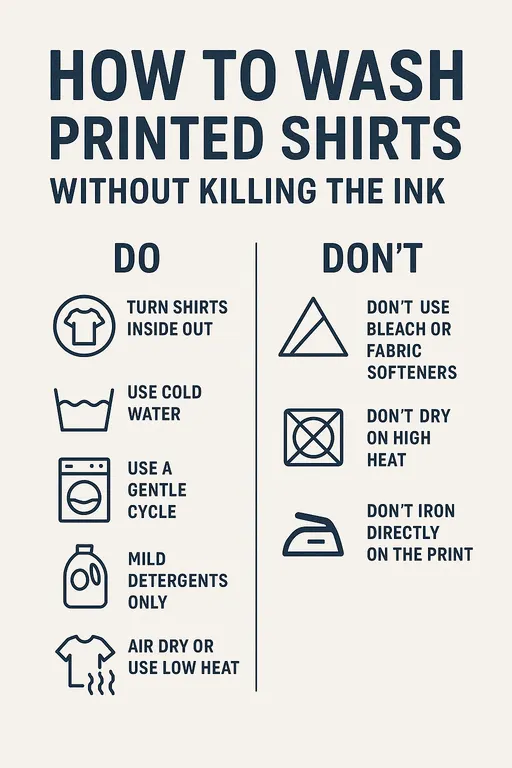
The good news is that it does not take much to improve shirt life. A few simple changes can make a noticeable difference.
First, wash shirts in cold water whenever possible. Cold water is easier on both fabric and print.
Second, turn shirts inside out before washing. This helps protect the printed surface from friction.
Third, use a gentle cycle instead of a heavy-duty one. If your machine has no agitator or has a gentler wash style, that can help too.
Fourth, avoid overloading the washer. Packed loads create more rubbing and twisting, which increases wear.
Fifth, dry on low heat or air dry when possible. High heat is one of the fastest ways to shorten the life of a t-shirt.
Finally, remove shirts from the dryer as soon as they are dry. Letting them continue tumbling in heat longer than needed is where over-drying starts to cause trouble.
A Better Way to Make Shirts Last
If you want your shirts to stay soft, hold their fit, and keep the print looking sharp, gentler laundry habits are worth it. Washing machine agitators can be rough on fabric, and over-drying can shrink, fade, and weaken even a great shirt. Over time, that combination can make a t-shirt look older than it really is.
Taking a little extra care can go a long way. Whether you have company uniforms, convention shirts, promotional apparel, band merch, or everyday custom tees, proper washing and drying helps protect your investment.
At Accent T-Shirts, we believe custom apparel should not only look great when it is printed but continue looking good after repeated wear. If you need high-quality custom t-shirts in Las Vegas, or want help choosing the right print method and shirt style for long-term wear, Accent T-Shirts is here to help.
Written by Lindy Williams, Owner of Accent Promotions and Media, Accent T-Shirts, and Race Day Outfitters. Based in Las Vegas, Lindy specializes in custom apparel, screen printing, embroidery, DTF printing, DTG printing, promotional products, convention merchandise, and branded apparel for businesses, events, and teams.