Knowledge
Threading the Resistance: Why the Humble T-Shirt is a Protest Movement’s Greatest Weapon
11/10/2026
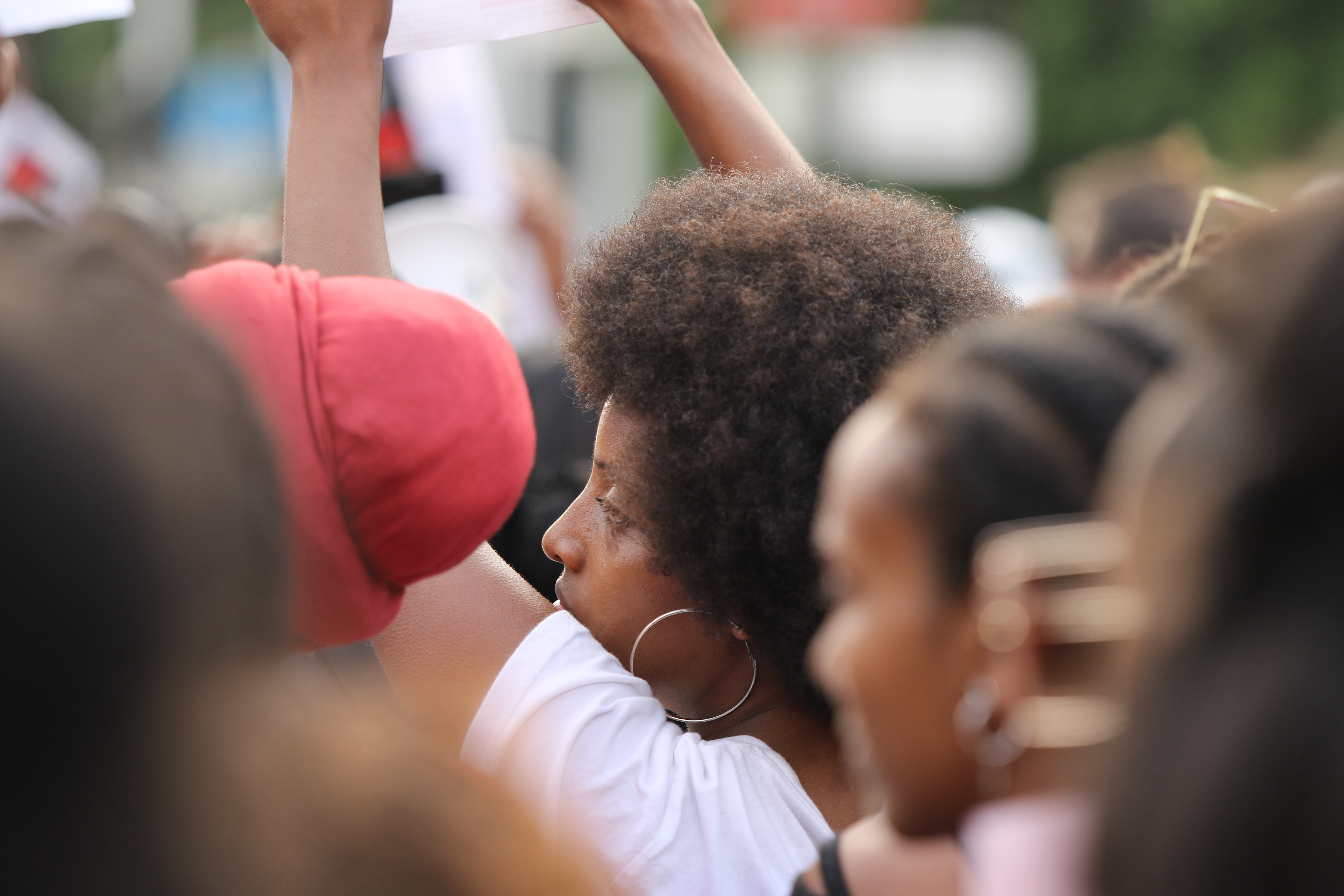
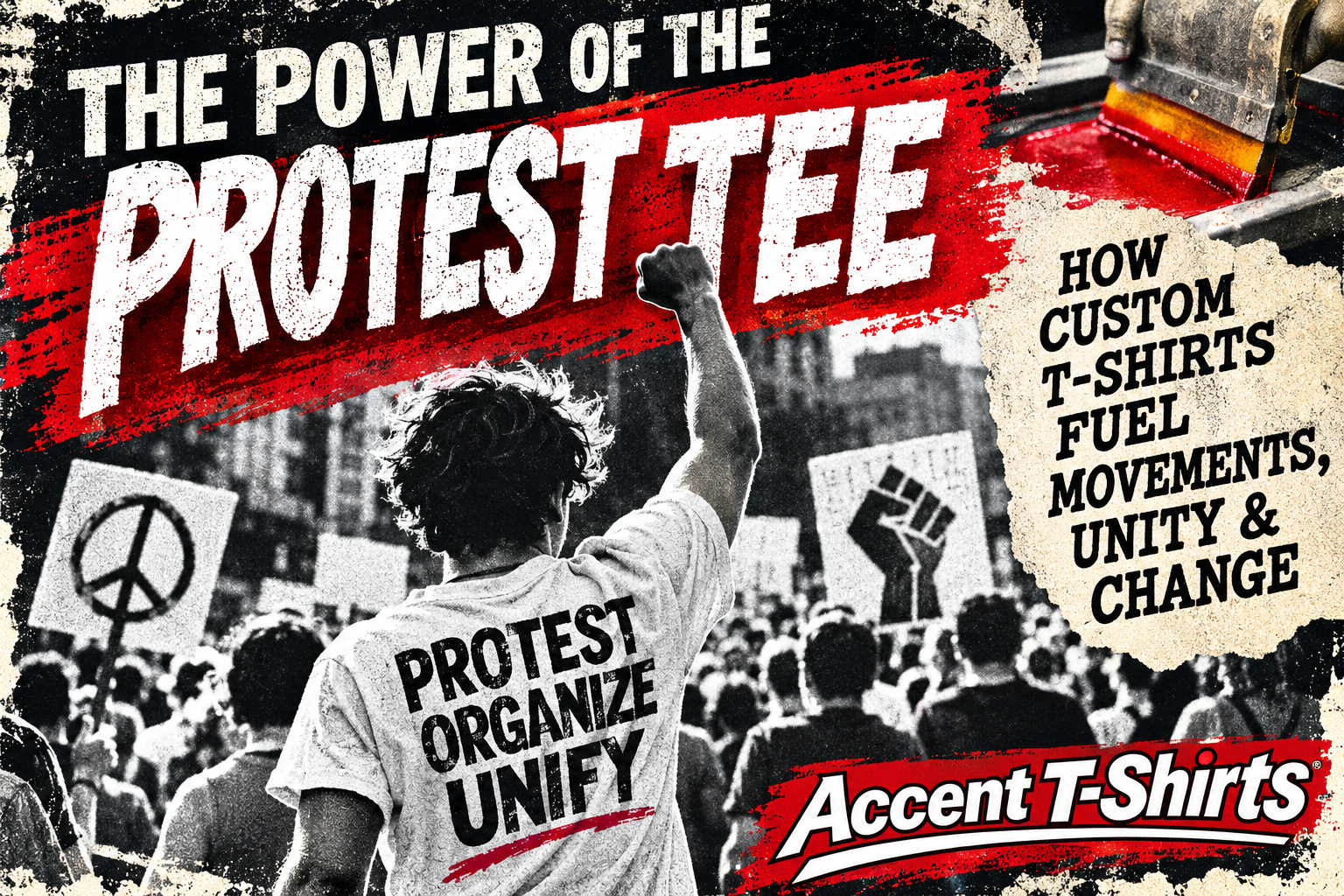
Long before a movement trends online, before hashtags circle the globe, and before banners are unfurled under stadium lights, a revolution usually starts on a piece of cotton.
Think back to the most iconic images of social change over the last century. Mass mobilizations are rarely defined by complex policy papers alone. They are defined by a visual language—a sea of unified colors, bold typography, and direct statements cutting through the noise. At the heart of that visual language sits the ultimate democratic garment: the T-shirt.
Here at Accent T-Shirts, we talk a lot about fit, fabric, and print quality. But beneath the seams of custom apparel lies something much more profound. The t-shirt is more than an article of clothing—it is a walking billboard, a unifier, and a silent voice for the voiceless.
Let’s take a deep, comprehensive look at why custom tees have historically been—and continue to be—one of the most powerful tools for protests, grassroots organizing, and social movements worldwide.
1. The Walking Billboard: Maximum Visibility, Zero Permission Needed
Banners require poles, permits, heavy lifting, and police clearance. Megaphones run out of batteries, require electricity, and can be confiscated. Digital posts and social media campaigns can be algorithmically suppressed, shadowbanned, or buried in a fast-moving news feed.
A custom t-shirt requires none of that administrative overhead.
When activists walk into a crowd, ride public transit, or march down a major metropolitan street wearing a custom-printed shirt, they instantly transform into mobile hubs of awareness. The message travels wherever the wearer goes, long after the speeches have ended, the megaphones have been packed away, and the crowds have dispersed. It is a form of communication that operates 24 hours a day, 7 days a week, demanding zero digital infrastructure to broadcast a bold truth to the world.
Furthermore, this form of decentralized visibility is exceptionally resilient. Governments and corporations can censor websites, block hashtags, or restrict gathering spaces, but they cannot stop citizens from walking down the street wearing their convictions on their chests. The t-shirt decentralizes power, putting the megaphone directly onto the backs of everyday people.
2. Unifying the Crowd: The Psychology of the Uniform
When thousands of individuals mobilize for a cause, their individual identities temporarily merge into a single collective force. However, orchestrating a cohesive, unified look across a diverse, decentralized grassroots crowd can be an immense logistical challenge.
Custom protest shirts solve this instantly. Whether it’s a striking colorway, a sharp minimalist logo, or a punchy, unforgettable slogan, matching tees create a powerful visual wall that alters the entire psychological landscape of a protest.
The Power of Visual Cohesion
The Press and Media Advantage: Photographers, photojournalists, and television crews are drawn to visual harmony. A unified block of color and messaging reads instantly on camera, capturing the scale, seriousness, and organization of a movement for evening news broadcasts and front pages worldwide.
Internal Solidarity and Morale: For the individual participant, putting on a movement shirt fosters an immediate psychological bond. In a crowd of thousands, it can feel isolating to stand up to established power. A shared shirt says: You are not alone in this fight; we are standing shoulder-to-shoulder, and our strength is multiplied.
Deterrence and Presence: Visually unified crowds project authority and determination. A sea of matching shirts communicates to onlookers, lawmakers, and opposition groups that a movement is disciplined, organized, and not easily ignored.
3. Lowering the Barrier to Entry for Advocacy
Activism can often feel intimidating. Not everyone feels comfortable stepping up to a microphone, leading a complex chant, or confronting authority figures head-on. But putting on a t-shirt is an act of participation that anyone can manage.
It provides a low-friction entry point for supporters who want to declare where they stand without necessarily stepping into the spotlight. A person who might never speak at a rally will proudly wear a shirt that speaks for them during their daily commute, at the grocery store, or at a family gathering.
Furthermore, a well-designed protest shirt acts as an organic, non-confrontational conversation starter. When a curious stranger asks about a slogan, a symbol, or an emblem, it opens the door for a meaningful, face-to-face dialogue that social media algorithms simply cannot replicate. These micro-interactions build grassroots empathy one conversation at a time.
4. A Brief History of Slogan-Driven Defiance
The intersection of apparel and politics is not a modern invention; it has evolved alongside modern history, adapting to every technological shift in textile printing.
The 1960s: Democratization Through Screen Printing
The modern political t-shirt truly came into its own during the 1960s. The commercialization of screen-printing technology made apparel production cheap and accessible. Anti-Vietnam War activists, civil rights organizers, and student movements seized upon the medium. They could cheaply print and distribute manifestos, peace symbols, and urgent calls to action onto basic cotton shirts, turning them into wearable flyers.
The 1980s: High Fashion Meets Political Statement
By the 1980s, designers recognized the cultural weight of the garment. Figures like Katharine Hamnett used oversized slogan tees—most famously her bold, block-lettered "58% Don't Want Pershing" shirt worn to publicly confront political leaders—to prove that a few simple words could shock the political establishment and dominate global newspaper headlines. Fashion was no longer just about aesthetics; it was a weapon of mass communication.
Today: Rapid Response Grassroots Movements
In the modern era, custom printing allows grassroots movements to mobilize in real time. From rapid-response climate action rallies to international human rights campaigns, organizers rely heavily on custom printing not just to raise awareness, but to fundraise, build distinct brand identities, and sustain long-term structural resistance.
5. Designing for Impact: What Makes a Great Protest Tee?
If you are organizing a march, launching a community initiative, or preparing for an upcoming rally, your apparel needs to do heavy lifting. It must communicate clearly, survive physical action, and align with the values of the movement. Keep these core design pillars in mind:
Readability at a Glance: People should be able to digest your message in two seconds while walking past you on a busy street. Avoid overly complex graphics or tiny serif fonts. Stick to clean, bold typography and high-contrast color combinations.
Durability and Comfort: Protests involve long hours on your feet, marching, chanting, and dealing with unpredictable weather conditions. A cheap, scratchy tee won't get worn twice. Investing in soft, high-quality, breathable cotton ensures supporters will wear your shirt proudly for years to come.
Ethical and Sustainable Production: There is a profound and poetic contradiction in wearing a shirt advocating for social justice, human rights, or environmental protection if the garment itself was produced under exploitative labor conditions or heavy environmental degradation. Sourcing ethically made, premium blanks matters deeply.
Wear Your Conviction
At Accent T-Shirts, we believe that fabric has power. Every thread tells a story, and every custom print is a chance to make noise for what matters. Whether you are marching for systemic reform, raising funds for a local mutual aid project, or building a brand-new community coalition, your clothing should work as hard as you do.
Are you organizing a march, a community fundraiser, or a movement close to your heart? Let’s bring your vision to life on durable, premium apparel that demands to be heard.